

First published in Communoid Issue 01 - read the original here (ACCESS KEY: PEOPLES_conspiracyCN01capital_PSYWAR)
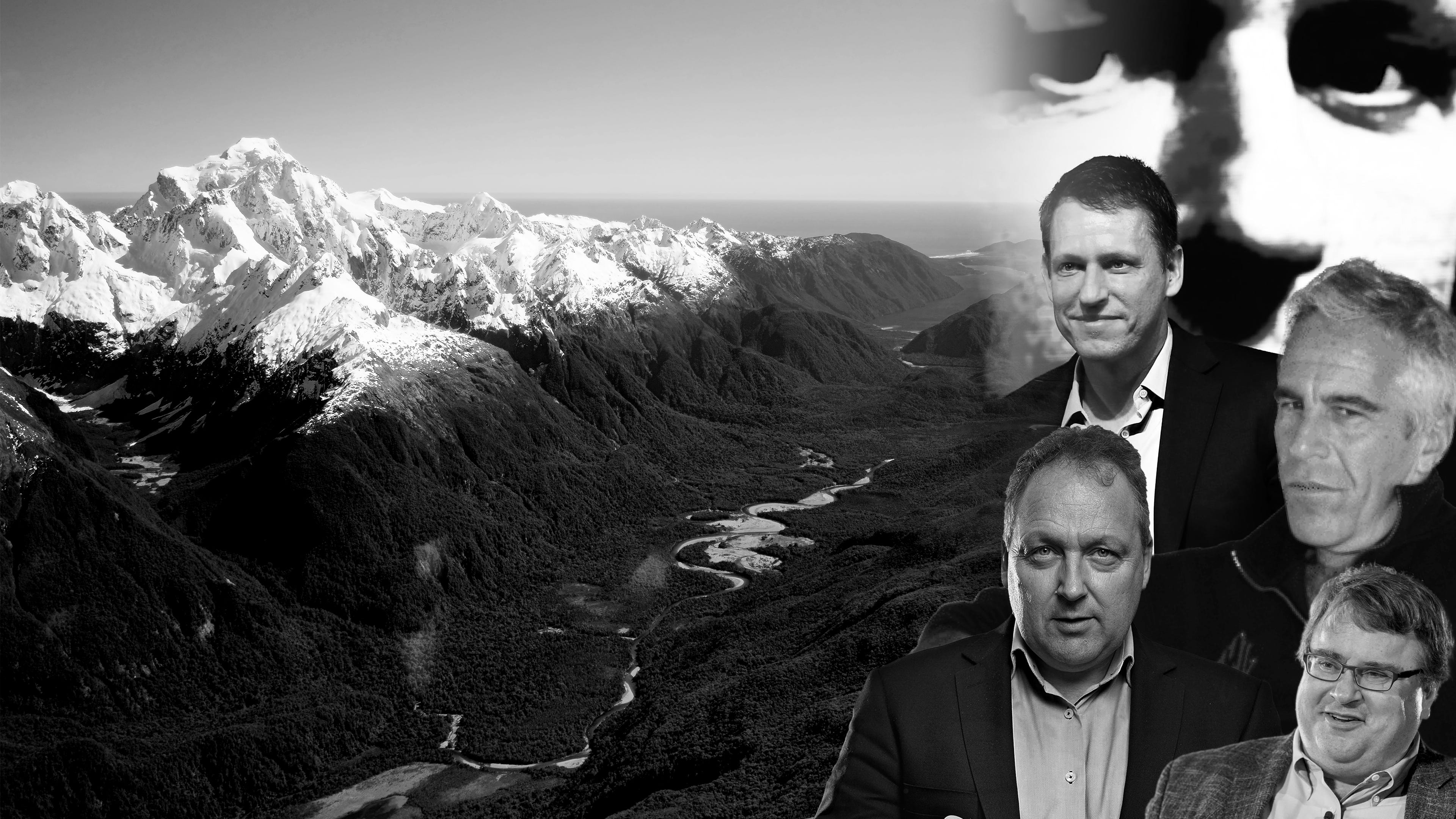
“I, Peter Andreas Thiel, swear that I will be faithful and bear true allegiance to Her Majesty Queen Elizabeth the Second, Queen of New Zealand, her heirs and successors according to law, and that I will faithfully observe the laws of New Zealand and fulfil my duties as a New Zealand citizen. So help me God.” — Peter Thiel at an August 2011 private New Zealand citizenship ceremony in San Diego
Peter Thiel, German-American tech billionaire and co-founder of PayPal and Palantir, is the most notorious elite and Epstein associate to set up shop in New Zealand in recent years. After years of lobbying, Thiel acquired citizenship under “exceptional circumstances” in 2011 as part a secret deal made with the New Zealand government. Following the disclosure of the deal in a 2017 exposé, Thiel became the figure most associated with “apocalypse insurance” Aotearoa New Zealand, with the country now regularly ranked as the best place to ride out “global societal collapse” alongside rumours of doomsday bunkers and private jet escape plans.
New Zealand’s geographic distance, small population, abundant resources, and acquiescent government has made the country popular amongst the rich and famous alike, with more and more flocking each year to the “Little Britain” of the South Pacific (or “Little Wet Israel”). They come to enjoy the natural beauty, the peace and quiet, and to build compounds and bunkers for when things really hit the fan. Not every rich person has the power to do what Epstein did for decades in the largest single residence in Manhattan, but when things start to fall apart, whose going to stop them?
Sauron and the Shire
Peter Thiel first visited New Zealand in 1995 at 28, having just left his career in law, finance and politics in the Northeast.1 He toured the country, including spending time in Queenstown, the South Island’s snowy tourist playground famous for its ski resorts and thrill attractions (including the world’s first commercial bungee jump site).The first movie in The Lord of the Rings cinematic trilogy was released in theatres 6 years later in 2001, famously shot all over New Zealand. Given that Thiel’s favourite fiction is Tolkien’s fantasy series, I’m sure those landscapes managed to lodge themselves in the back of his mind.
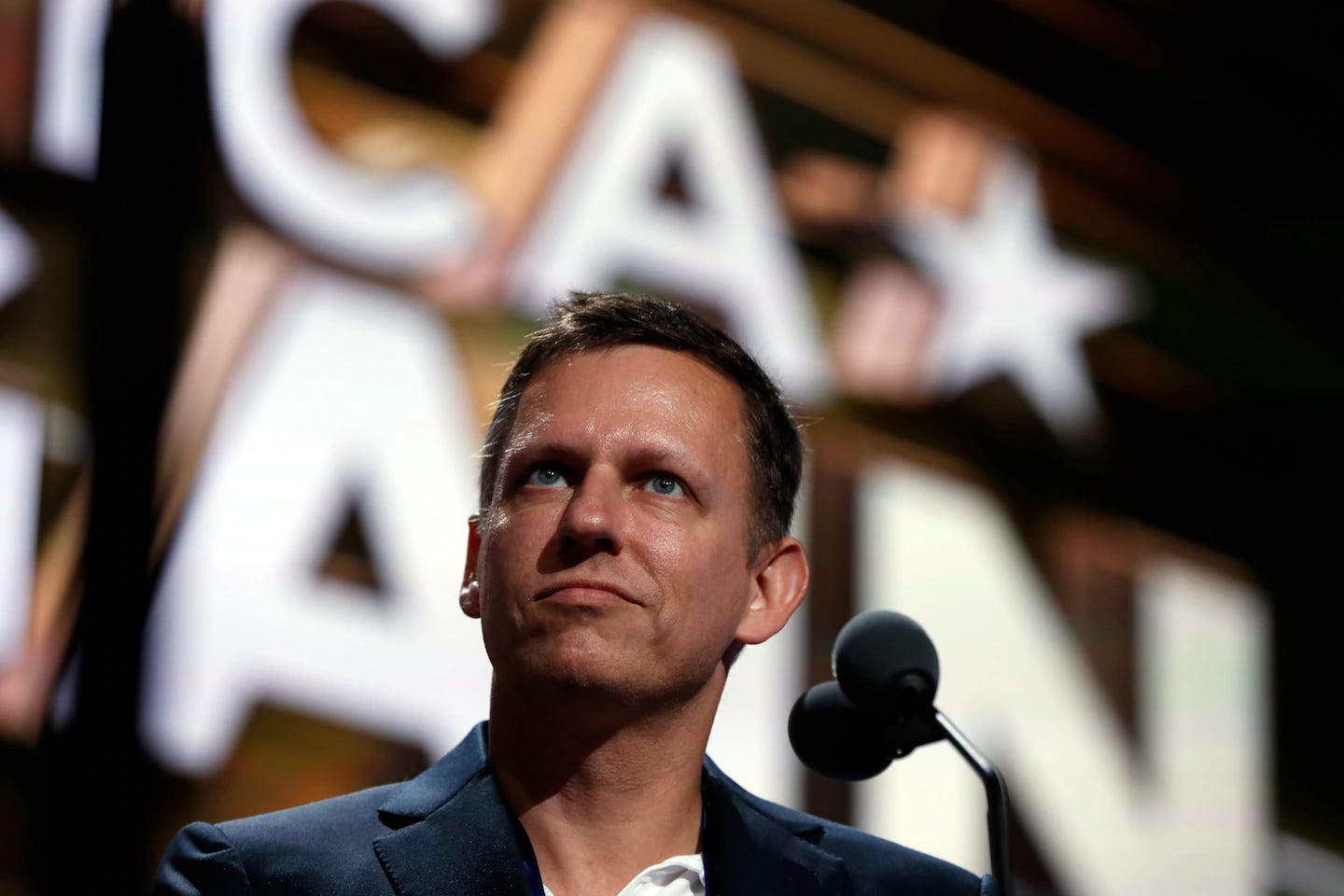
Thiel then headed to dot-com-boom California, co-founding PayPal in 1998 alongside other tech figures who would form the soon-ascendant “PayPal mafia”. In 2003, the year after the company was sold to eBay for $1.5b, Thiel first applied through New Zealand’s investor visa system, one which enables rich applicants to invest domestically in exchange for residency.2 This first attempt was abandoned. Thiel reapplied in 2005, mentioning in his application his particular interest in the South Island. Applicants have to hit a certain number of “points” graded by applicants’ circumstances and their domestic investment, and he crossed his threshold by parking $1m in a long-term deposit in a random provincial New Zealand bank branch.
Thiel visited infrequently after gaining residency at first, but things changed in 2008. In November, Obama won big against McCain, the latter of whom Thiel had backed following the exit of his original libertarian pick Ron Paul. 4 days later in New Zealand, ex-Merrill Lynch foreign exchange trader John Key led the centre-right National Party to their best result since 1990. Between 2009 and 2011, Thiel began aggressively lobbying the new government, talking to ministries and meeting with at least four senior ministers, including PM John Key, promising that in exchange for citizenship he’d invest heavily into New Zealand’s tech industry. The details of this arrangement were first revealed in 2017 by NZ Herald journalist Matt Nippert.3
As a show of his commitment, Thiel invested $4m into New Zealand accounting software startup Xero in 2010. Founded in 2006, Xero was at the time struggling to scale and looking for capital to burn. According to Nippert, Xero and its founder Sir Rod Drury would soon become “the biggest winner from Thiel’s brush with New Zealand”.4 Thiel incorporated Valar Ventures to fund the investment (named after the gods from The Lord of the Rings), something he later pitched to the government as a New Zealand-focused venture capital firm that would open a joint fund with the state-owned NZ Venture Investment Fund. Valar also invested $5.5m into Pacific Fibre, a company co-founded by Drury and Sam Morgan (founder of local auction site TradeMe) that planned to build an undersea fibre optic cable between Australia, New Zealand and America.
In late 2010, lawyers hired to lobby on Thiel’s behalf hand-delivered a letter from Thiel to the Minister of Internal Affairs, responsible in part for citizenship applications.5
“In the course of pursuing my international business opportunities, my travel, personal philosophical commitments and benefaction, I am happy to say categorically that I have found no other country that aligns more with my view of the future than New Zealand... It would give me great pride to let it be known that I am a New Zealand citizen”, Thiel wrote. His lawyer added: “Mr Thiel has advised that citizenship is irrevocable. It is the public recognition of a hallowed bond. For that reason and others, he is prepared to make this solemn allegiance to thereby embrace and contribute to the life, history and culture of New Zealand.”
In January 2011, Thiel formally applied for New Zealand citizenship. While his application was glowing, including endorsement letters from Drury and Morgan, his big plans for Valar, Xero, Pacific Fibre, tech “incubators”, tech “landing pads”, and more, there was one small hitch: out of the 1350 days of proven residency over the previous 5 years required for citizenship, Thiel had only logged 12. He argued that due to his fast-paced career, he instead fell under an “exceptional circumstances” clause that required ministerial signoff. He also donated $1m towards the February 2011 Christchurch earthquake recovery efforts to show off his charitable side.
The government approved his citizenship in June 2011, and in another extraordinary step, Peter Thiel was sworn in overseas at a secret ceremony in New Zealand’s Santa Monica consulate a month later.
While Xero became a multi-billion dollar success story, there weren’t many others from Thiel in New Zealand. Between 2011 and 2012, Thiel went from running a drowning hedge fund to making $1.3b off the $750,000 he had put into Facebook back in 2004. By 2012, before the firm had officially hired any New Zealand employees, Valar Ventures was quietly rebranded into Thiel’s internationally focused VC fund. Thiel, Drury, and Morgan’s South Pacific cable project was quietly shuttered. Thiel only ended up investing half of the $15m into the NZVIF that he’d originally promised and only invested roughly $50m across the country over the early 2010s.
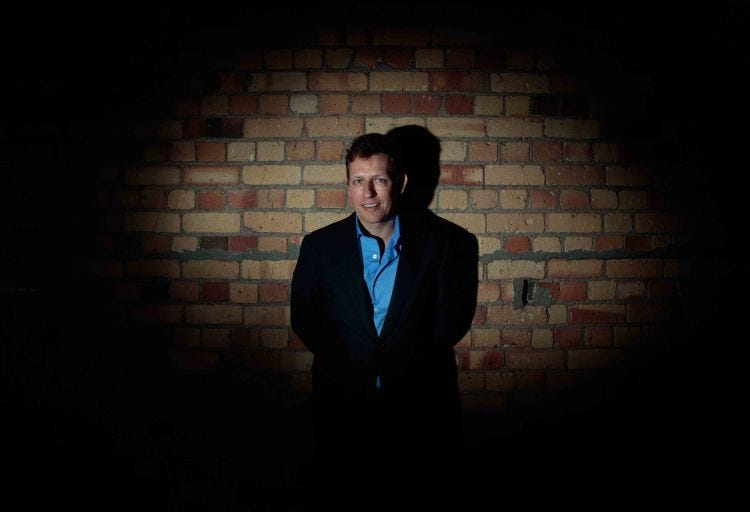
Thiel siphoned his money out of the shared NZVIF fund in 2016 using a “good faith” contract clause to claw back $30m off the back of his $6.75m investment.6 He was also able to secure contracts for Palantir with the New Zealand Defence Force and intelligence services dating to at least 2012, a year after his citizenship was approved. These contracts are still ongoing today.7 New Zealand Police were given a free trial of Palantir software as part of their response to the 2019 Christchurch massacre, as first reported by Will Evans and me on Exit From Affco earlier this year.8 In early 2025, the last of the New Zealand Valar legal entities were shuttered.9 In early 2026, Thiel’s Founders Fund invested into New Zealand agritech startup Halter, which uses digital collars to “calmly guide” cows through a smartphone app.10
The “Way to Collapse”
A few years after securing his New Zealand citizenship, Thiel was first introduced to Jeffrey Epstein as part of the latter’s forays into tech circles. They shared interests in transhumanism, cryptocurrency, eugenics, elite power, and keeping an entourage of “disconcertingly attractive” younger men or women around them.11 They went on to message over 2,000 times and met repeatedly between 2014 to 2019.12
Thiel first pitched Valar Ventures as an investment opportunity to Epstein as part of their early exchanges in late 2014, the former “NZ-focused fund” he’d rebranded into Thiel’s international vehicle (even citing Xero as one of the fund’s recent successes). Epstein went on to invest $40m into two funds in 2015 and 2016, an investment now worth nearly $170m in 2026.13 Epstein pitched the Israeli startup now known as Carbyne to Valar in 2016, but it was rejected for being too premature.14 Carbyne was later picked up in 2018 by Founders Fund, another fund cofounded by Thiel and other PayPal mafiosi. It’s now a provider of real-time data collection for emergency service response systems (like 911) in 23 US states and 6 countries.15
Throughout their relationship, Thiel and Epstein discussed the increasing global turbulence that began accelerating rapidly by the mid-2010s, something which seemed to be a preoccupation of both.
Epstein: “brexit, just the beginning”
Thiel: “Of what?”
Epstein: “return to tribalism . counter to globalization. amazing new alliances. you and I both agreed zero interest rates were too high, and as i said in your office. finding things on their way to collapse , was much easier than finding the next bargain”.16
A month later, Epstein emailed AI scientist Joscha Bach as part of a wider conversation between the two:
“maybe climate change is a good way of dealing with overpopulation..the earths forest fire. potentially a good thing for the species”17
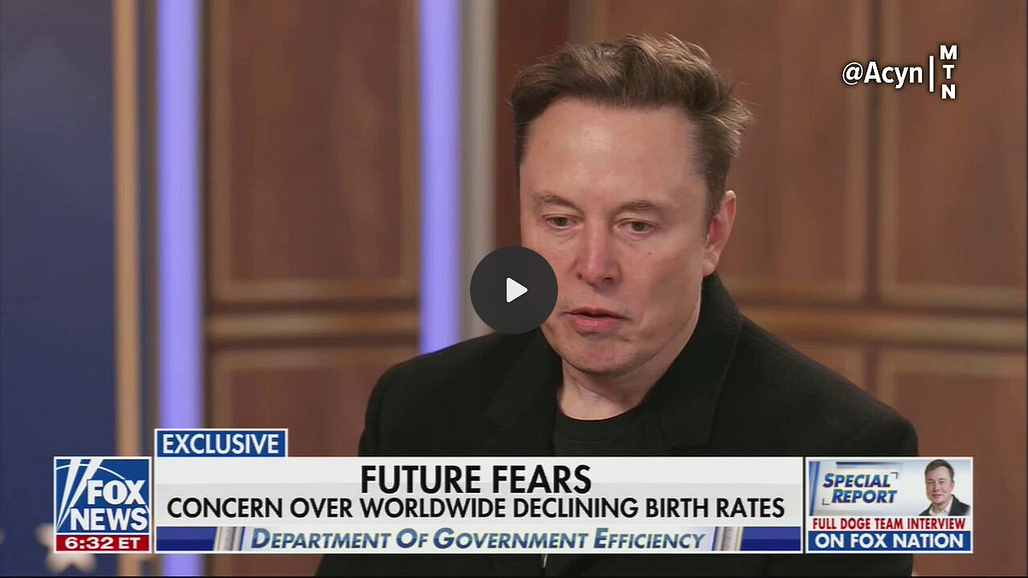
The more reactionary side of Silicon Valley seems to be increasingly focused the so-called End Times and possible “escape plans” away from the collapsing United States. Some have seen this as traitorous, with Elon Musk, telling FOX two months into his DOGE crusade that:
“America is the central column that holds up western civilization. If that column fails, it’s all over, you can’t run off to New Zealand or some other place”.18

Thiel in particular has been notorious for his interest in “backup countries”, as America’s trajectory becomes increasingly unpalatable to a German who grew up in an apartheid neo-Nazi compound in present-day Namibia. He applied for Maltese citizenship in 2022 after years of interest in the island nation. On a 2024 Joe Rogan episode, Thiel discussed permanently moving to New Zealand (out of a few options) to escape California’s taxation, complimenting the country’s tech sector compared to Australia’s.19
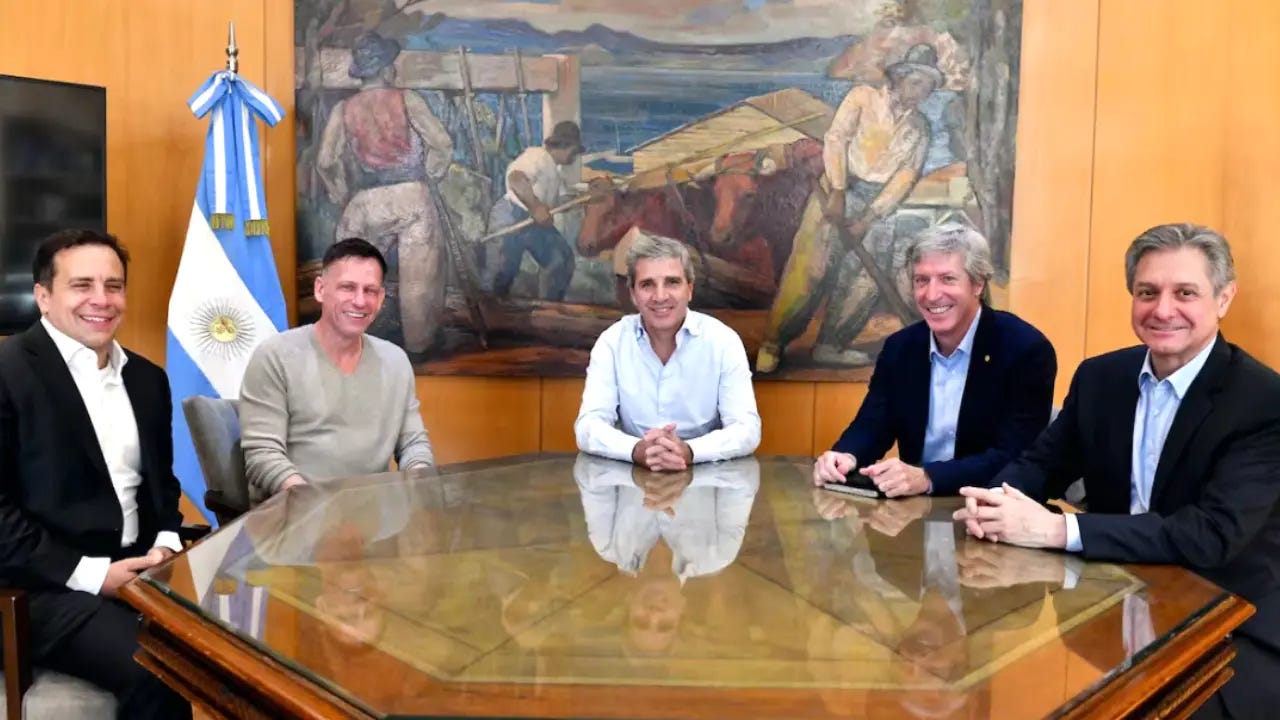
In mid-2026, Thiel made headlines for spending multiple months travelling across South America. During his tour, he visited political and business leaders across the continent, especially in countries with governments sympathetic to his interest, purchased a Buenos Aires mansion alongside land in Uruguay, and reportedly relocated his family to Argentina for the foreseeable future.20
While Thiel may have lost some of his initial interest in New Zealand, The Sovereign Individual might make his intentions more clear. In a 2014 Forbes interview, Thiel cited the 1997 book as the most important or influential one he ever read (alongside The Lord of the Rings, of course), even contributing a preface to a 2020 reprint.21 The book prophesises that liberal democracies will collapse due to the pressures of technological acceleration, and a network of libertarian corporation-states led by uber-rich CEO-kings will replace them. New Zealand is mentioned 13 times in the book (as well as Argentina), highlighted as a country with suitable geography, isolation, natural resources, and a malleable state.
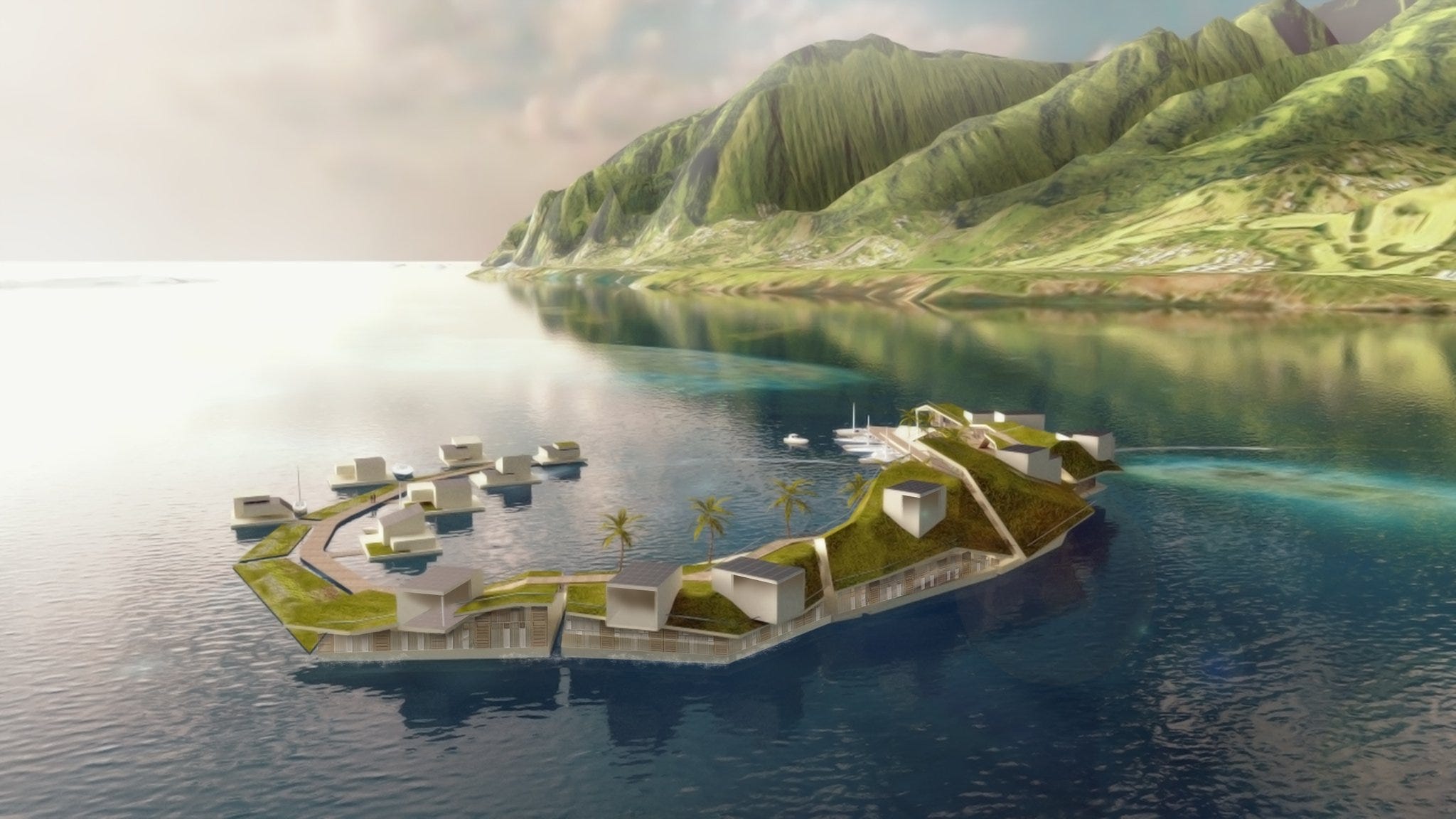
The Sovereign Individual and its billionaire prepper dross is an early example the “network state” ideology now entrenched amongst American libertarian tech circles, especially Thiel’s. This crowd has bankrolled recent attempts to acquire land to execute on the idea of creating a “network” of privately run settlements outside of state control. The prime example is Praxis, a startup originally founded in 2019 to develop a private city in the Mediterranean, but pivoted in 2025 to planning a “defence-focused spaceport city” on California’s Vandenberg Space Force Base, a site already home to multiple private space companies.22 Another is the Thiel-funded Seasteading Institute, which has instead tried to geoform artificial islands. The institute signed an agreement with French Polynesia in 2016 to explore development of a floating city, but this was cancelled by the government in 2018.23
“A Dirty Little Country”
One key aspect of New Zealand identified by The Sovereign Individual in 1997 was its government. Going back to the wake of the Great Depression, New Zealand’s first unionist Labour government from 1935 to 1949 oversaw the creation of a social democratic welfare state, introducing sweeping reforms, nationalising key industries, and overseeing massive public works campaigns. While Labour was filled with veterans of the radical union movement, the moderate faction successfully pursued a path of collaboration over confrontation with capital in an attempt to navigate New Zealand’s precarious position and reliance on the British Empire (and the City of London).24
For the following decades, New Zealand saw prosperity rivalled by few countries, buoyed by high exports in milk, wool, and meat. This newfound wealth was also enabled by the settler state having defeated armed indigenous Māori resistance by the late 1800s and completing the systematic dispossession of their land, and by serving as “Britain’s breadbasket” (and butcher) industries like agriculture and meatpacking had a guaranteed customer. This arrangement was left largely untouched by successive governments, leading to an extensive social safety net and one of the most controlled economies in the West for decades.
However, following the one-two punch in 1973 of the OPEC oil shock and Britain joining the EU’s Exclusive Economic Community, the country found itself in increasing turmoil. Elected in 1975, National PM and protectionist strongman Muldoon tried heavy-handed levers like wage and price freezes to right the ship, but these often had little to worse effect and by the early 1980s doubts in the system were growing. As an ideological vacuum within the opposition Labour Party widened, a neoliberal faction was able to take key positions in the early 1980s and won back Parliament in a 1984 snap election called by a drunken Muldoon.
1984 onwards was a gold rush for the Labour neoliberals enacting “Rogernomics” (named after Minister of Finance Roger Douglas), as well as their business and financial collaborators. State-owned assets like the railways, telecoms, the national airline, the national bank, the forestry department, and more were sold for scraps to corporate raiders and multinationals. The public service, state-owned enterprises, and blue-collar jobs, the union strongholds, saw tens of thousands of layoffs. Unemployment rose from 3.6% to 11%.
Deregulation was introduced across the board, especially in financial markets, with effectively zero insider trading oversight and money laundering not outlawed until 1992. A select few were getting incredibly rich by pilfering the state’s coffers, and all that capital needed to go somewhere. It started flowing through the recently constructed tax havens and dark money networks of the Pacific, where New Zealand’s elite began to interlock with the international mafia networks that Epstein and his ilk were building at the time.
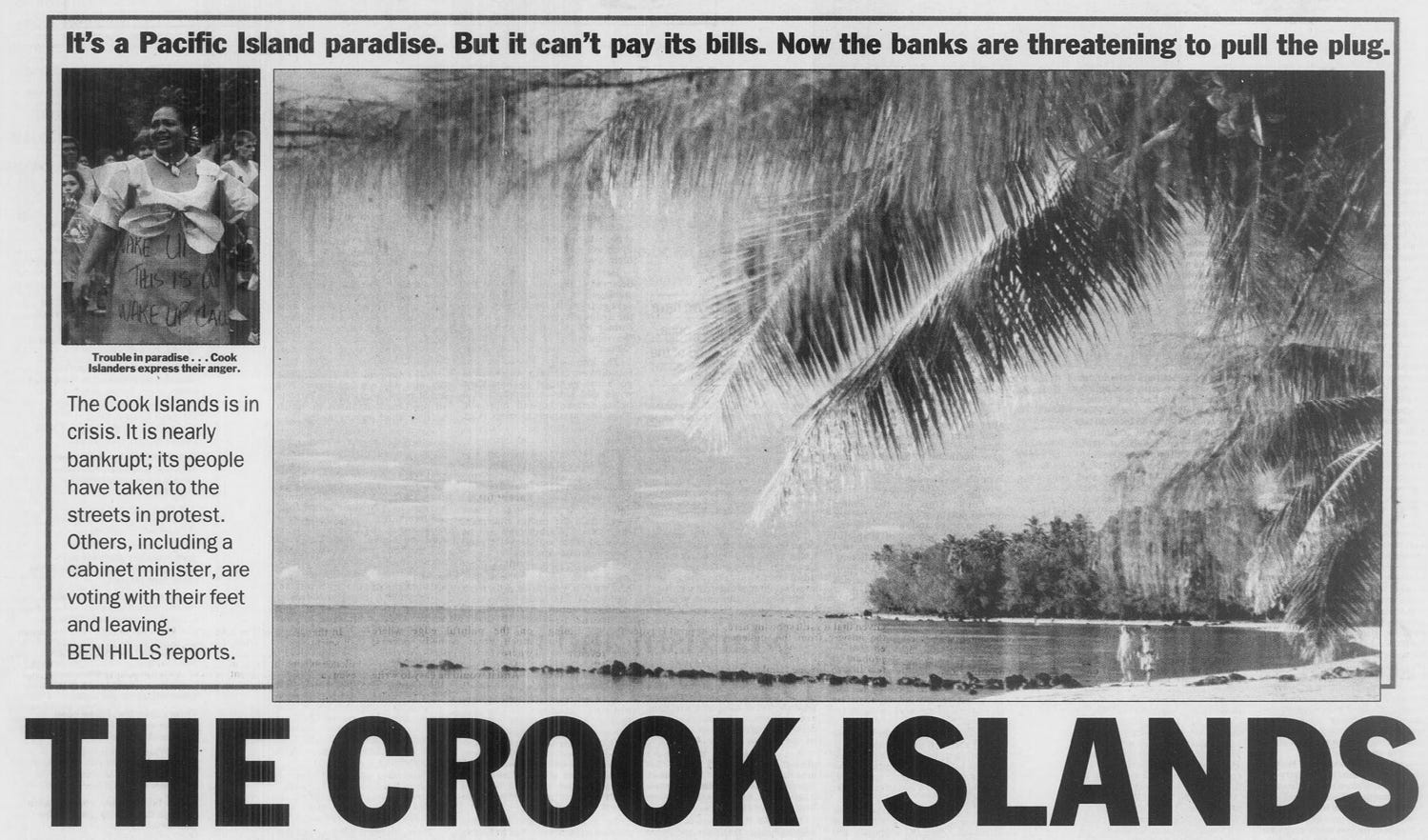
The Crook Islands
The Cook Islands is a semi-sovereign colonial territory of New Zealand, annexed in 1901 during the scramble for the Pacific. Official “self-governance” was only introduced in the 1960s, and the island remains subservient to New Zealand. Over the 70s to 90s, well connected lawyers, lobbyists, and government officials, often from New Zealand and Australia, were able to convince Pacific governments to host legal and financial institutions that specialised in black-box privacy, tax evasion, tax fraud, money laundering, shell companies, illicit funds, the whole nine yards. Like their Caribbean equivalents, these countries became floating tax havens for their rich and/or criminal neighbours.
A literal winebox of documents brought into the New Zealand Parliament in 1994 revealed how a group of domestic financial sharks were using the Pacific to dodge taxes and siphon money from the state and out of the country. Central to the ‘Winebox affair’ was European Pacific Investments, a banking group jointly owned by the state-run Bank of New Zealand, investment bank Fay Richwhite (co-owned by Finance Minister Roger Douglas’ merchant banker friends Michael Fay and David Richwhite)25 and Brierly Investments.26 Brierly was founded by notorious corporate raider Ron Brierly, notorious both for his ruthlessness and his 2019 arrest on charges of possessing 11,000 child sexual abuse files.
While the scandal focused on how New Zealand citizens were using the Pacific tax havens, these financial networks were also employed by Epstein’s world, linking the New Zealand bourgeoisie to the capital flows of the American deep state and its allies. Australia-based Nugan Hand Bank was the CIA’s primary vehicle for clandestine funding in the Asia-Pacific over the 1970s.
Nugan Hand also providing banking services for the New Zealand “Mr. Asia” syndicate,27 a heroin trafficking ring that quickly went global with its steady supply of Golden Triangle “China white” before it fell apart in 1980, partially taking Nugan Hand
with it. Much of the money reaped by Mr. Asia’s bankrollers back home went straight into the property market. Finance Minister Roger Douglas then appointed the dodgy Australian Citibank employee who vouched for Nugan Hand as the head of the Australian branch of the Bank of New Zealand. Shockingly, the government soon had to bail out that branch a few years later after it’d somehow lost hundreds of millions of dollars.28
European Pacific, Fay, and Richwhite were directly accused of involvement in a number of schemes linked to American intelligence, including providing financial services to Iran-Contra front companies and working with Nixon & Ford’s Treasury Secretary and prominent Contra fundraiser Bill Simon.29 The Rarotonga (the largest island in the Cooks) branch of the National Bank of New Zealand was also accused of holding tens of billions worth of USD for a subsidiary of BCCI,30 the bank that largely facilitated the American deep state’s dealings across the Global South over the 1980s. In 1986, another New Zealand bank known as NZI bought the remnants of bullion trader Deak International,31 another front owned for decades by Hungarian-born CIA asset Nicholas Deak. Deak International went on the market after a homeless woman travelled by bus from Florida to New York to Deak’s offices, and shot him shortly before a scheduled Senate testimony.
The Cook Islands were also part of a 1986 scandal wherein the New Zealand Māori Affairs Department got suckered on a dodgy $600m investment deal, one that traced back to a Honolulu CIA front company for money laundering and intelligence operations.32 The scandal threatened the Labour government that had just signed a policy banning US nuclear ship visits, blowing up the ANZUS military alliance. The scandal was similar to the 1975 loan affair that toppled Australian PM Gough Whitlam after he threatened the future of the crucial US-operated Pine Gap spy base, a scandal connected back to Nugan Hand.
A number of shady characters drifted through the Pacific and Cooks during this period. USAF veteran and Iran-Contra associate Lawrence John Fahey served as an “aviation advisor” to the Cooks PM during the 1980s.33 One of Fahey’s staff in listed in the winebox documents was William Paupe, a USAID worker accused of funding anti-government protests leading up to the 1987 Fiji coups.34 Allegations were also made that the Cooks serviced corrupt US-backed Filipino dictator Ferdinand Marcos, with New Zealand gold trader and convicted Goldcorp fraudster Ray Smith saying that he’d laundered part of Marcos’ share of imperial Japan’s WWII plunder, aka the legendary Yamashita’s Gold, on behalf of the Cooks government.35
Let us gaze quickly into the tangle of BCCI and Iran-Contra networks: Epstein’s alleged time on the BCCI desk in the late 1970s and as a “tax mitigation advisor” to VIP clients at Bear Stearns introduced him to the figures and networks that were building the international mafia now colloquially referred to as the “Epstein class”. After an internal investigation and suspension over misconduct, he quit Bear Stearns in 1981 to strike out on his own as a free-lance “financial advisor” and “bounty hunter” for embezzled funds, becoming a key conduit for BCCI and Iran-Contra dealings. And these circles quickly found themselves in proximity to the ascendant New Zealand bourgeoise, a nation that one US diplomat in the 1990s called “a dirty little country when you scrape away the façade”.36
The legacy and continuity of these criminal financial networks is still seen today. In 2013, it was revealed that John Spencer, toilet paper empire scion and at one time New Zealand’s richest man, also ran the massive Cook Islands tax haven company TrustNet from the 1980s onwards.37 In 2016, PM John Key, responsible for overseeing Thiel’s citizenship, was the only world leader called out by name by the Panama Papers leaker for being “curiously quiet” on “the financial fraud mecca that is the Cook Islands”.38 New Zealand’s secretive New Zealand foreign trust system was also actively promoted by Mossack Fonseca, the firm at the heart of the Panama Papers scandal.
Later that year, it was revealed Key’s personal lawyer Ken Whitney lobbied the Minister for Revenue to prevent a rule change that would make foreign income subject to reporting requirements and overseas taxes.39 Key’s lawyer Whitney was also a director of Rothschild (NZ) Ltd., a New Zealand company which owned two British Virgin Islands companies that had Mossack Fonseca listed as their agent.40 The 2017 Paradise Papers leak would later reveal that Epstein was a client of tax haven law firm Appleby through his notorious Bermuda-based “Liquid Funding Ltd.” company, a key piece in the house of cards that caused the 2008 recession.41 Appleby was also present in the Pacific, operating in states like the Cook Islands, Samoa, Vanuatu, and the Marshall Islands.
These scandals led to the government launching the Shewan Inquiry in April 2016, which partially overhauled the foreign trust system. John Key stepped down as PM in late 2016, soon going on to join various corporate boards. He joined the board of Palo Alto Networks in 2019, an Israeli-American tech company that serves as an incubator for Unit 8200 startups. In 2024, he was named in a lawsuit accusing Palo Alto leadership of insider trading and misleading investors, something Key denies despite the fact he sold $709k USD worth of Palo Alto stock in the preceding year.42 In 2025, the University of Otago announced it would be partnering with Palo Alto Networks to provide cybersecurity programmes at a satellite campus in Queenstown.43
Building Rivendell
While a few like Thiel had acquired their Aotearoa apocalypse ticket early on, there was an influx from the mid-2010s onwards, especially from Americans worried about Trump. In the seven days following the 2016 election, 13,401 Americans applied to Immigration New Zealand, over seventeen times the average.44 “Well, I can always move to New Zealand...” became a punchline on talk shows and Twitter, and a few big names actually started thinking about it. When asked in 2019 what he’d do if Trump won again, former FBI director James Comey joked that he’d be dealing with it from his “new home in New Zealand”.45 In particular, New Zealand appealed to the Silicon Valley tech elite growing increasingly paranoid about the world they were helping construct, seeing the country as the perfect place to escape to when it all eventually collapses. During the turmoil of the 2016 election, OpenAI figurehead Sam Altman revealed that he and Thiel had a plan to flee to a New Zealand property in the event of “societal collapse”.46
The burgeoning of this list of bourgeois flight risks overlapped with Epstein’s entry into big tech circles in the mid-2010s through ventures like the Edge Foundation, which hosted the likes of Thiel, Elon Musk, Bill Gates, Jeff Bezos, Lawrence Krauss, Pierre Omidyar, and more. Google co-founder Larry Page attained New Zealand residency in 2021, using it to get his son through COVID quarantine for medical treatment not available in Fiji, the country where he was spending the pandemic.47 Page was a frequent attendee of Edge events, having known Epstein since at least 2003. LinkedIn co-founder and PayPal mafioso Reid Hoffman claimed in 2017 that “saying you’re ‘buying a house in New Zealand’ is kind of a wink, wink, say no more”, and at least 50% of Silicon Valley billionaires have some form of “apocalypse insurance”, with New Zealand being a popular choice.48 Hoffman was one of Epstein’s closest tech confidants, frequently meeting with him, attending Edge events together, and facilitating Epstein’s donations to the MIT Media Lab, a relationship that lasted until 2019.49
Although no evidence Epstein visited New Zealand has been uncovered, he certainly had links to the country and would have been aware of the reputation it was gaining. In 2017, Epstein’s long-time accountant Richard Kahn forwarded him a New York Times piece titled “Peter Thiel, Trump Adviser, Has a Backup Country: New Zealand”.50 I covered earlier this year on Exit From Affco emails that show celebrity scientist and Epstein associate Lawrence Krauss was enamoured with the country, unsuccessfully attempting to get Epstein to visit twice and to fund an institute at the University of Otago in Dunedin, only 170 kilometres from Queenstown.51 Perhaps most notably, former New Zealand Defence Force and Navy chefs Brice and Karen Gordon began working for Epstein in the early 2000s as head managers of Zorro Ranch, later serving a similar role on Little St. James. A 2026 New Mexico investigation has uncovered evidence that Brice arranged massages for Epstein at Zorro, but following Epstein’s death in 2019 they’ve since vanished off the face of the earth.52
Some of the mega-powerful, like Epstein, Richard Branson, Mark Zuckerberg, and Larry Ellison have the money and infrastructure to buy, develop, and maintain an isolated private island, and then make sure it survives societal collapse. However, many don’t, or would prefer not to be wiped out by rising seas or tropical storms. Some like Thiel, Page, and Hoffman see New Zealand and other locations as their ticket out instead, possibly motivated by the safety in numbers of being surrounded by other mega-rich VIPs.
A handful of these New Zealand escapees have publicly announced themselves, like director James Cameron or American finance billionaire Bill Foley. This wave was also partially diminished by a 2018 ban on foreign home ownership under Jacinda Ardern’s Labour government, but a mixture of legal loopholes still allowed non-residents to rent property, buy property through proxies or shell companies, or buy non-residential land for development. These methods often intentionally avoid public disclosure, as a large part of owning a “secret” doomsday compound is that it stays secret. There are likely many who will never be publicly confirmed.
In 2022, Labour overhauled the investor visa system Thiel first used back in 2005, replacing it with the Active Investor Plus Visa (aka ‘Golden Visa’). Applicants now only had to invest $15m NZD into the country in exchange for residency. Elected in late 2023, the new National-led coalition government has announced itself to be much more welcoming to these VIP visas. Coalition member the ACT Party is deeply tied to the Atlas Network, the “libertarian” think tank network embedded amongst the international reactionary movement and instrumental in figures like Milei and Bukele, big proponents of the slowly emerging network state.
The coalition government lowered the requirement to $10m in April 2025, before removing the foreign home ownership rule and allowing visa holders to purchase a property worth at least $5m once approved for $5m off the total required. By February 2026, 573 applications covering 1,833 people had been submitted, with 40% from American citizens (617 people).53 There is now a rash of retreats, mansions, compounds, developments, and gated communities that hit this price tag, grouping in particular regions around the country.
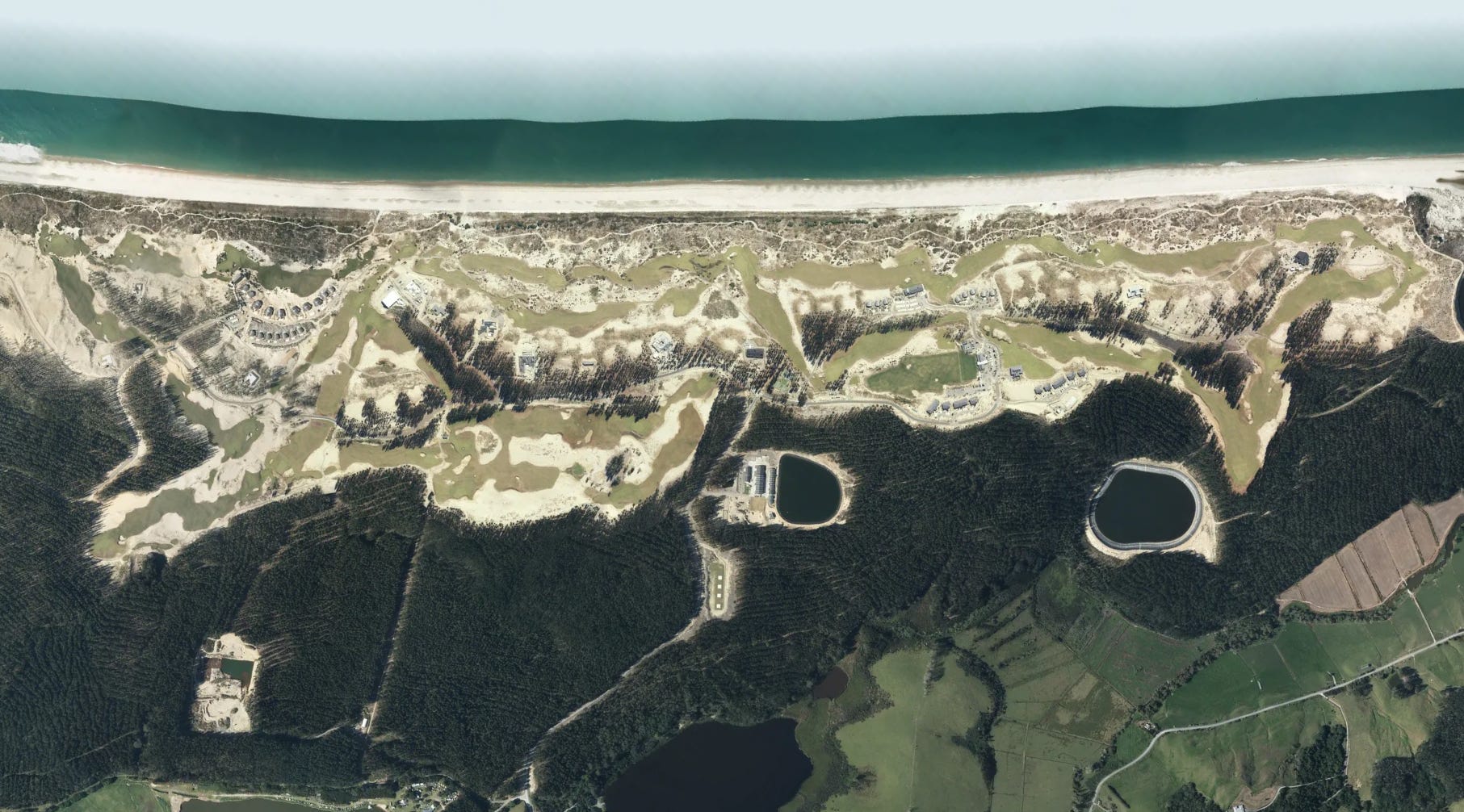
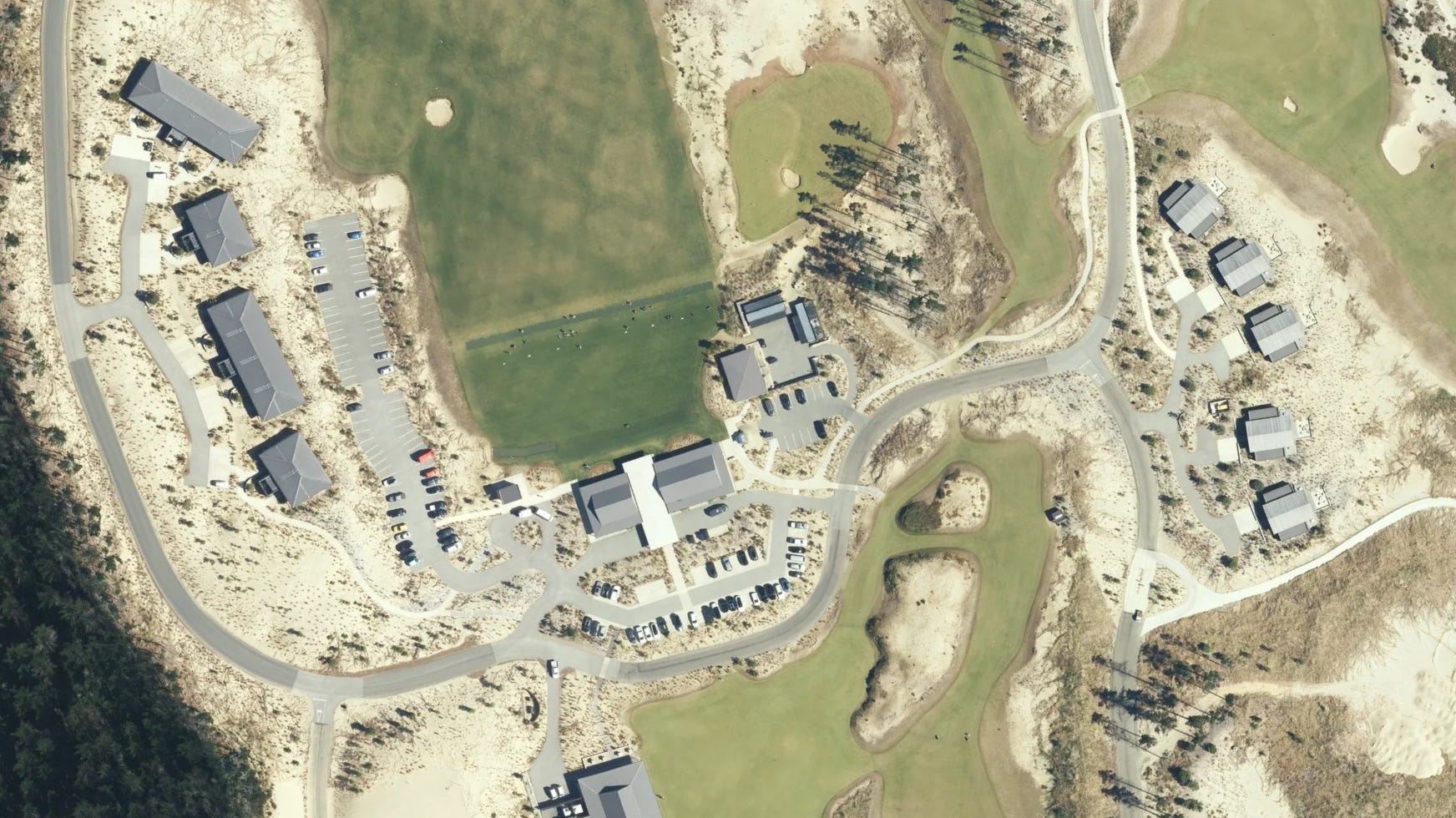
Going top to bottom, the North Island’s Northland region is home to multiple mega-rich compounds, including the estates of two American finance billionaires, Ric Kayne and the late Julian Robertson. Kayne and the Robertson family have also built globally-renowned luxury golf courses in the region: Te Arai Links & Kauri Cliffs respectively. Te Arai Links has also established itself as a hot ticket for property, where plots or already-built homes inside the gated and guarded perimeter are privately sold, with some properties worth up to $100m. Details on buyers have been kept under tight wraps, but some names have emerged, including the Mowbray family, multi-billionaire owners of Zuru (responsible for Bunch O Balloons) and since 2016 owners of the Coatesville mansion previously rented by Megaupload owner Kim Dotcom. The first property sold on the public market was listed for $18m in February 2026, with Te Arai’s director telling media “a lot of people look at [a house in Te Arai] as a multi-generational asset, very akin to Pebble Beach or the Hamptons [in the US]”.54
Waiheke, the tiny Martha’s Vineyard-esque island off the coast of New Zealand’s biggest city, Auckland, also plays host to the domestic and international uber-wealthy. It’s been visited by the likes of Taylor Swift, Bill Gates, Madonna, Justin Timberlake, Jay-Z and Beyoncé, and the Hollywood crowd now regularly shooting blockbusters in New Zealand. More and more mansions and bunker-like compounds are popping up in exclusive and gated subdivisions like the Matiatia Estate, located around the coast or deeper into the island’s interior.
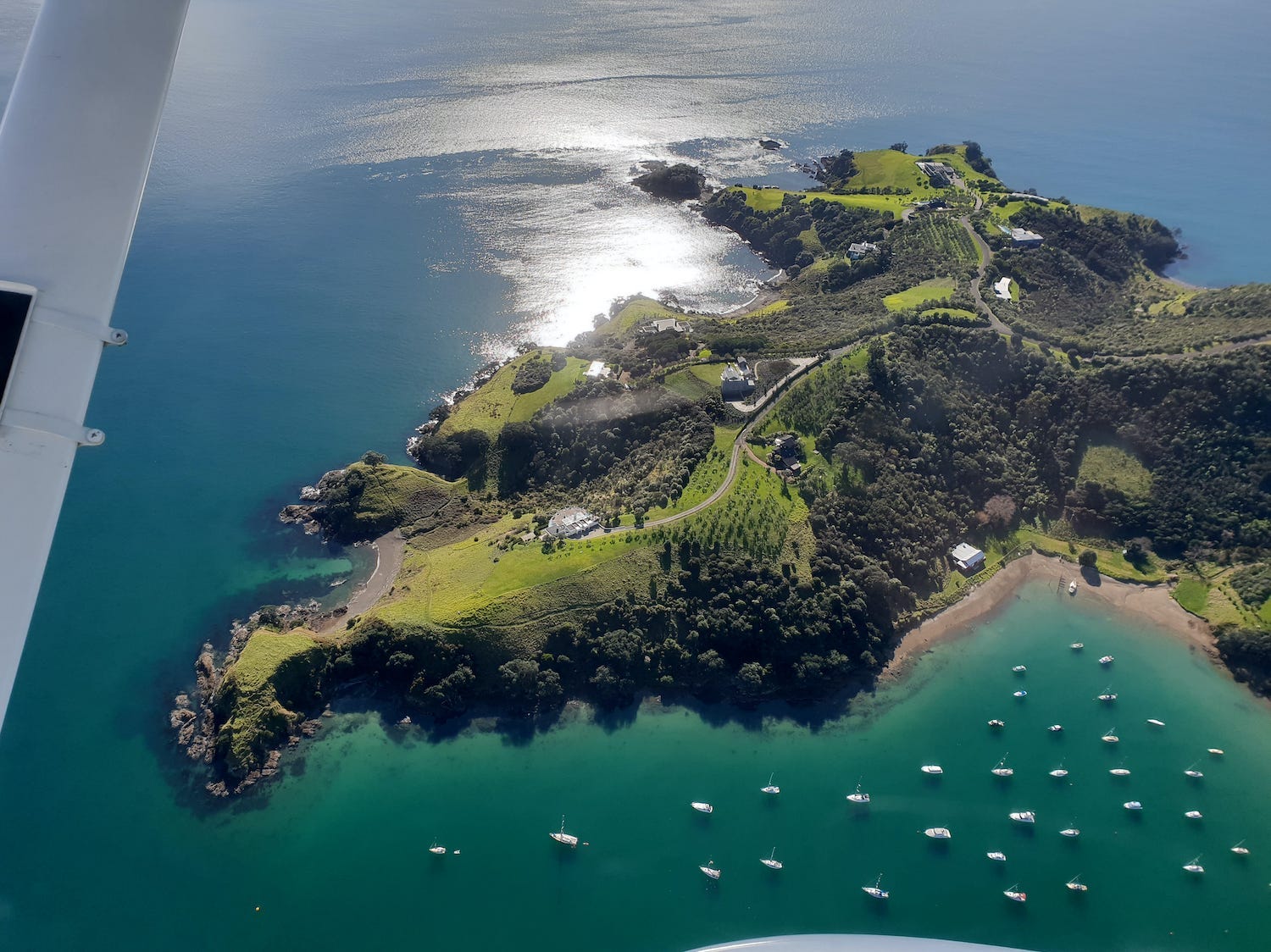
New Zealand’s richest man, Graeme Hart, has a sprawling 40-hectare $41m estate, with a private jetty for his fleet of yachts and super-yachts. New Zealand’s former richest man and aforementioned TrustNet owner, John Spencer, bought up almost half of the island, now owned by his family alongside their vineyards and boutique restaurants. The Rothschilds recently put their Waiheke vineyard property (located on Rothschild Terrace) on the market in late 2025, originally purchased sometime in the mid-20th century to serve as a “Cold War bolthole”.55
At the start of lockdown in 2020, author Neil Gaiman and his wife Amanda Palmer hired 22-year old New Zealander Scarlett Pavlovich to be a live-in nanny at their Waiheke mansion, but Gaiman began repeatedly sexually harassing and assaulting her. She was unable to leave as she had been homeless and living on a beach before her hiring. In Pavlovich’s lawsuit against Gaiman, she claimed that after escaping she filed a complaint with New Zealand Police, but they “took no action because Palmer refused to talk to them”.56
The lower South Island is another node for this crowd, home to upmarket towns like Queenstown, Wānaka, and Arrowtown, all surrounded by sweeping mountain ranges, natural seclusion, and large amounts of uncontaminated glacier water. There are many rumours about doomsday bunkers throughout the region, with one American company claiming to have shipped 35 bunker units to New Zealand by 2018, something denied by the government.57 Another company claimed in 2025 to have constructed one for a client in New Zealand but remained tight-lipped about details, with rumours circulating it was built outside of Queenstown.58
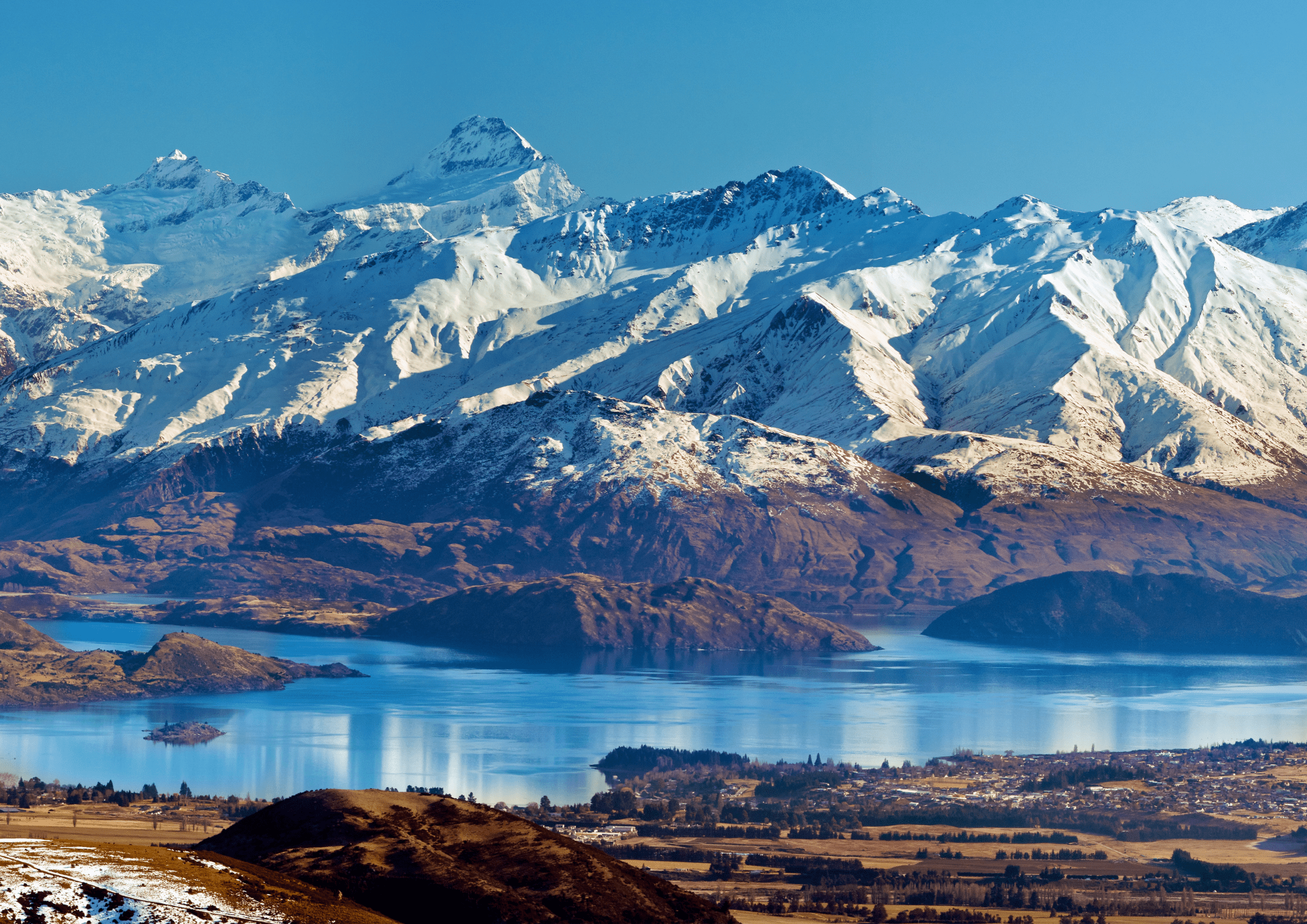
Sam Morgan, founder of New Zealand auction site TradeMe, co-founder of Pacific Fibre, and a former director of Xero, was one of the first tech figures to buy in the area, purchasing the isolated 2,665ha Hillend Station near Wānaka for over $25m NZD in 2008.59 In March 2020, he announced the sale of private lots on the lower reaches of the station near Wānaka for a private development he called Hillend Estates, featuring fully fenced grounds and gated access. NBC News host Matt Lauer began leasing the isolated Hunter Valley Station near Wānaka in 2017 a year before sexual misconduct allegations came out against him during #MeToo. Lauer left the country in the early 2020s.
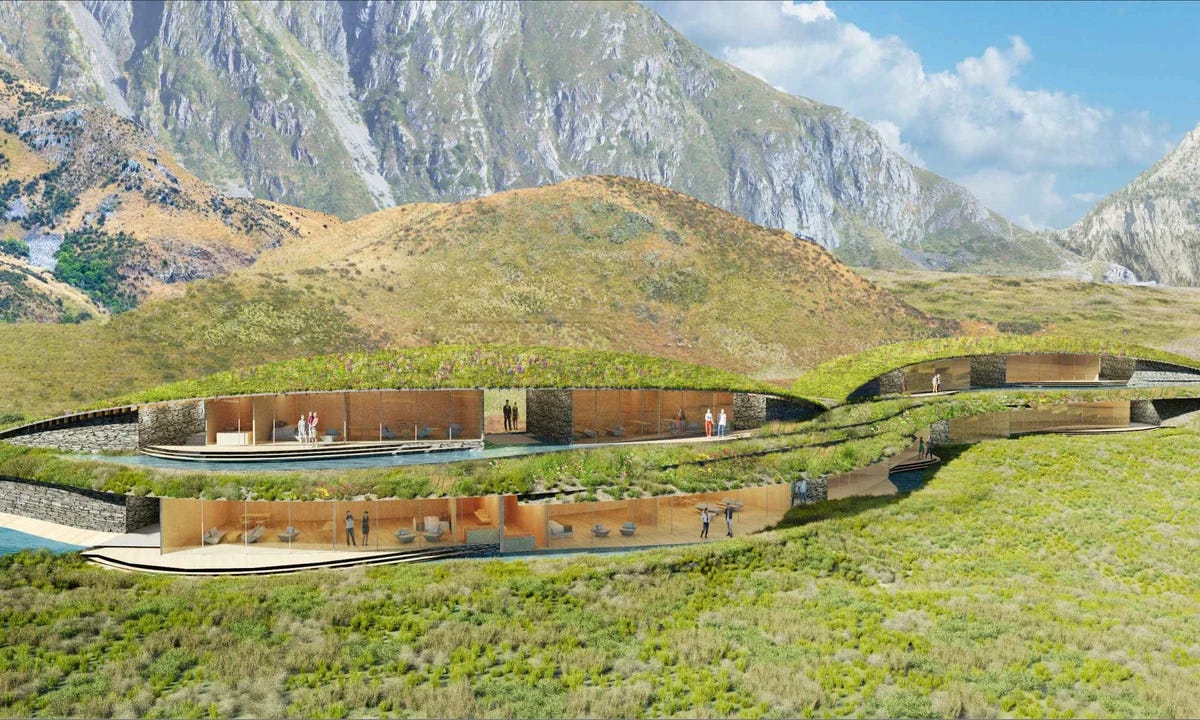
In 2015, Thiel bought land near Lake Wānaka, submitting plans in the late 2010s to build a large, private, semi-submerged lodge that could host a dozen or so guests. He was soon tied up in a prolonged legal battle over objections by neighbours and environmental groups, losing in the Environment Court in 2024 and seemingly abandoning the project. He sold his Queenstown mansion (known as the “Plasma House”) after ten years of ownership in 2021, with mention in the press of repairs after a “major fire” in 2016. However, it is likely he still has property that has been able to be kept secret, made doubly easy by his citizenship status.
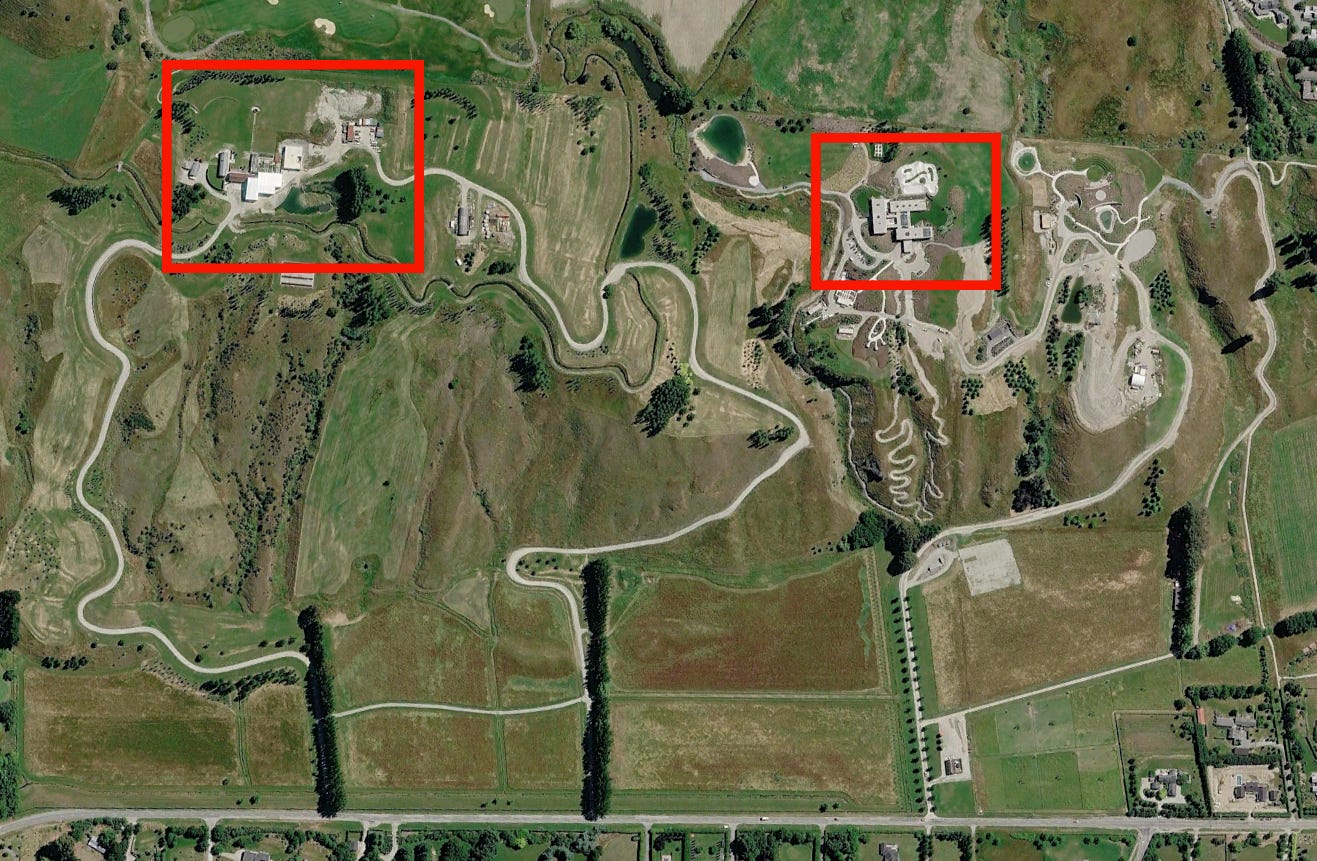
Sir Rod Drury, Thiel’s friend and founder of Xero, built a compound near Queenstown and Arrowtown in the late 2010s, later seeking resource consent in 2021 for a bunker-
like “meeting house” to host government and business VIPs.60 Drury has become an evangelist for Queenstown, attempting to attract investment and business into the region. Drury hosted both the New Zealand and Australian PMs at his compound last year, holding press conferences and meetings on his property. Will Evans and I reported earlier this year on rumours that Drury’s compound has hosted meetings for the intelligence community, and that the construction of a sensitive compartmented information facility (SCIF) on the property had been requested by the New Zealand government.61 While the minister responsible for the intelligence agencies denied the allegations, Five Eyes conferences have been hosted at the Millbrook resort 5 minutes up the road. In early 2026, Drury was accused of workplace sexual harassment while he was CEO of Xero by multiple former employees, with allegations that his behaviour was notorious at the company.
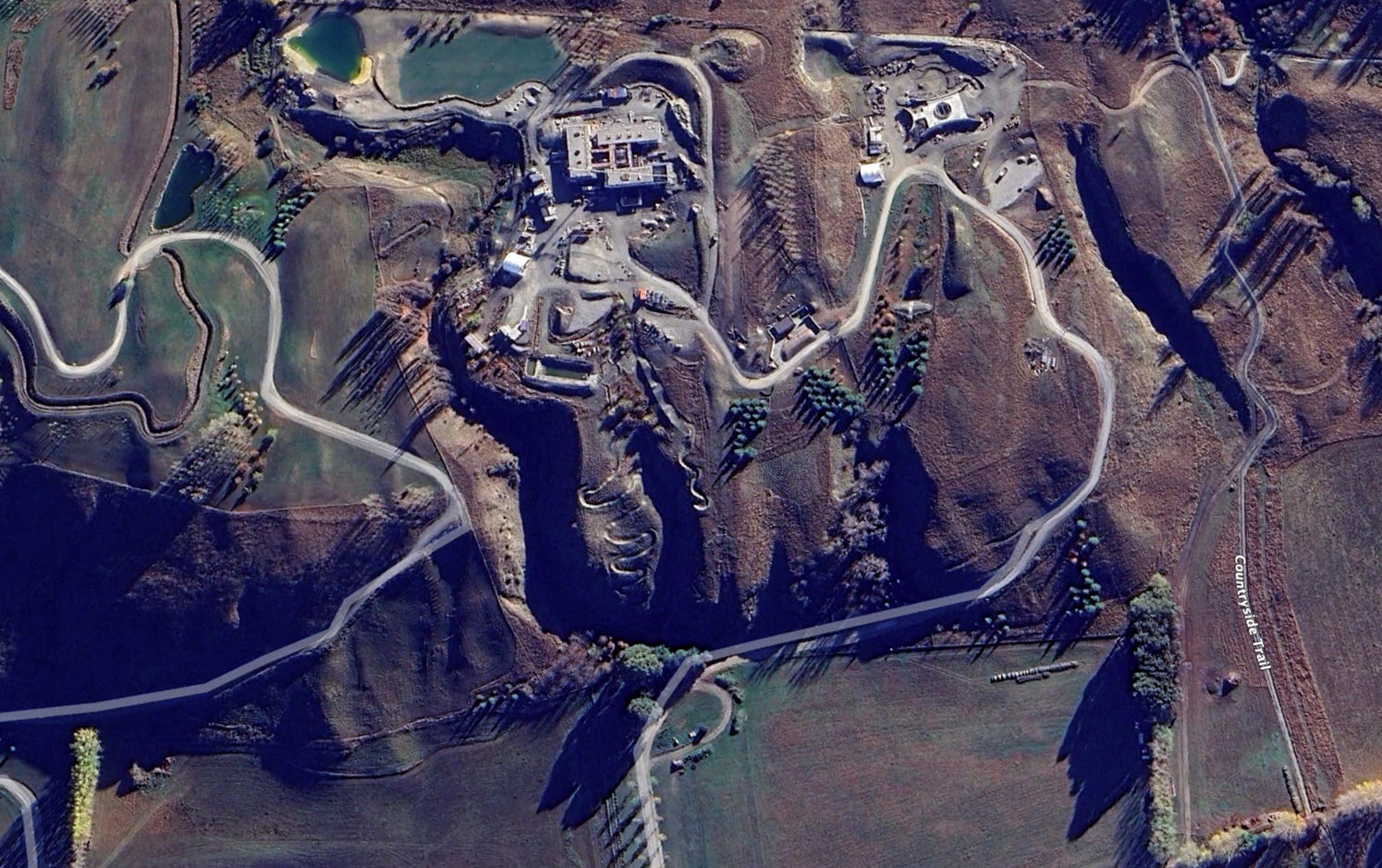
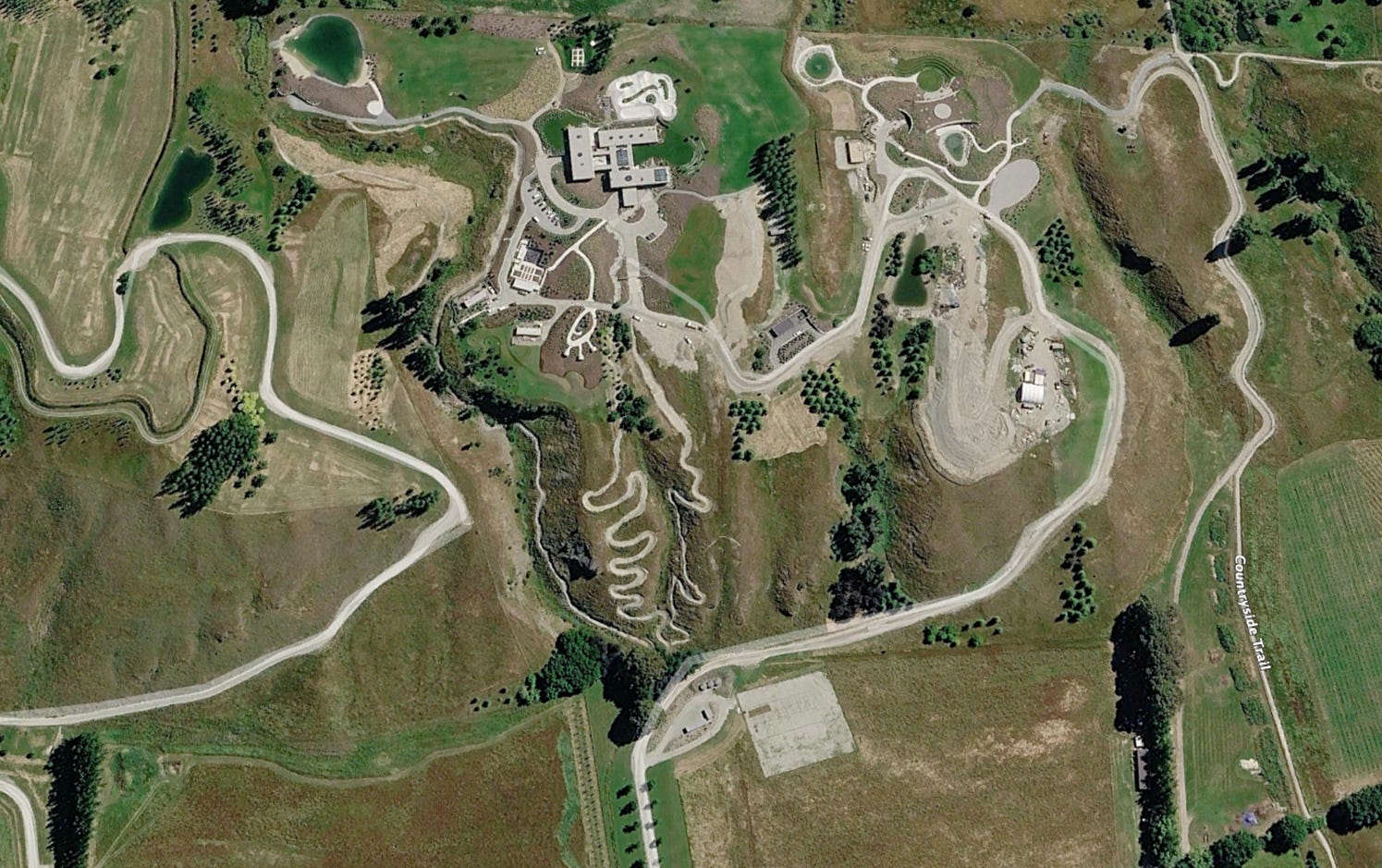
Drury’s literal next-door neighbour is American-born Brian Cartmell, another interesting “techugee”. Cartmell first started as CTO at the Internet Entertainment Group (IEG), an online pornography pioneer founded by Seth Warshavsky. Warshavsky and IEG made headlines for creating the “first [online] cam-girl show” in the mid-1990s, ran out of a converted Seattle warehouse. The company was quickly embroiled in numerous controversies and lawsuits, many stemming from their purchase of the rights to often illicitly acquired sex tapes like the Pamela Anderson & Tommy Lee videos, and Cartmell’s additional slate of provocative websites and hoaxes invited further legal trouble. In 2000 the business collapsed under the pressure of litigation and allegations of widespread fraud and money laundering, with Warshavsky fleeing to Thailand. Ex-IEG employee and author of Generation Kill Evan Wright labelled Warshavsky “the first and greatest con artist of the digital era” in a 2000 Rolling Stone post-mortem of the company.62
After IEG, Cartmell became a somewhat notorious domain salesman, stealing the .XX country codes of two island nations. He then became an anti-spam proprietor, with this venture securing his long-term wealth. He helped set up the initial tech backend of Breitbart.com before quickly falling out with Andrew Breitbart over ad profits.63 Cartmell (alongside Thiel) was also one of the biggest donors for what is now the Machine Intelligence Research Institute (MIRI), the key Bay Area AI research and rationalist organisation which also spawned the Zizian doomsday cult. He was an early crypto adopter, first buying Bitcoin in 2010 and being a first-round investor in the Coinbase and Kraken exchanges. In 2013, he listed on his website that his primary interests were “individual freedom, bitcoin, seasteading [linking to Thiel’s Seasteading Institute], precious metals, artificial intelligence, computer security, life extension, and locally produced food.”64 He moved to Queenstown in 2010 before acquiring citizenship five years later, and has donated hundreds of thousands of dollars to the governing right-wing coalition ahead of the November 2026 election.65
Craters of this moneyed barrage now scar the country. Penthouse apartments that sit empty, luxury boutiques on Waiheke, super yachts flitting through the harbours. While a lot doesn’t hit the press, you can come across some strange stories if you keep your ears open.
A Pennsylvanian international concrete and mining magnate (with likely intelligence connections) who lends his private jet to local right-wing politicians.
A British TV personality running a sex cult bringing in female backpackers to work at his ‘wellness retreat’ for free.
A billionaire swinger couple with multiple compounds and part-ownership of an Auckland sex club.
A German Porsche heir (and Thiel associate) putting out job listings for someone to build “a library that would remain meaningful and useful under extreme long-term scenarios”.
A Hare Krishna-with-hippie-characteristics cult whose star pupil is a certain Hawai’ian senator-turned-DNI, featuring key New Zealand members who’ve been involved in drug trafficking and 9-figure fraud schemes, building strange compounds out in the middle of nowhere.
Missing persons or bodies that show up on the shores of Waiheke every few years, with no explanation or follow up.
It’s hard to know what’s happening up long driveways on sprawling estates or brutalist concrete compounds, in hermetically sealed wine cellars or soundproofed safe rooms. That’s true for New Zealand and wherever else the rich flee to ride out whatever comes next. Perhaps future generations will hear rumours, perhaps whispers will only emerge after the dust has settled, or perhaps the bourgeois hideaways will remain encased in a solid wall of silence forever. After all, it took decades for the Epstein story to come out and he was using the largest single residence in Manhattan as his headquarters, operating in plain sight in the heart of the American metropole.
Luckily, not every international elite has the same connections as Epstein. Not everyone is an intelligence asset for multiple states, in possession of blackmail on numerous world leaders, nor “represent[s] the Rothschilds”, as Epstein told Thiel in a 2016 email.66 For Epstein to be untouchable while operating so brazenly, it required near-constant corruption, blackmail, bribes, pay-offs, intimidation, and violence, among other tools, alongside his continued usefulness as an asset. In 2019, that usefulness seemingly came to an end.
Epstein only saw the beginnings of the “return to tribalism” and “collapse” that he prophesised to Thiel back in 2016, an era we are now living through. Epstein’s disciples, many enmeshed into the “network state” movement, are now trying to navigate an increasingly uncertain future. As the Amerikan empire and its death rattles shake the world system apart, the international elite will continue to seek life rafts to ferry them beyond the reach of the fallout, whether that be in the Scottish Highlands or the South Pacific. They seek autonomy, security, and privacy, shielded behind security fences and blast hatches in miniature fiefdoms. The New Zealand government, like many others, is creating a system to let them achieve that. What, after all, does the network state seek to network if not thousands of Little St. Jameses?
Acknowledgements: Special thanks to William Evans and Daph for research and much, much more. Thanks as well to Klonny, Theta, and the rest of the Communoid team for helping get this out into the world.
Download Issue 01 here to read my piece (this version is a bastardisation compared to the incredible design by Theta) and the other pieces:
Jeffrey Epstein in the Black Box: Complexity, Cybernetics, and the Death of Humanity by Eyes Wide Open
The Epstein Network’s Subversions in Cuba, Colombia, and Pink Tide South America by ParaPower Mapping
I also had the pleasure of appearing on Klonny’s show to discuss this piece (among other topics), which you can listen to here.
Matt Nippert, “Citizen Thiel,” The New Zealand Herald, 2017, https://www.nzherald.co.nz/indepth/national/how-peter-thiel-got-new-zealand-citizenship/.
Ibid.
Ibid.
Ibid.
Ibid.
Ibid.
Matt Nippert, “NZ Defence Force links to Peter Thiel’s software company revealed,” The New Zealand Herald, April 8, 2018, https://www.nzherald.co.nz/business/nz-defence-force-links-to-peter-thiels-software-company-revealed/CQERZL63SUPMXSYB47NHFOS4HQ/.
Smith K. Stead and William Evans, “EXCLUSIVE: How Palantir Found Itself Used in the Wake of the Christchurch Massacre,” Exit From Affco (blog), April 15, 2026, https://www.exitfromaffco.com/p/exclusive-how-palantir-found-itself.
Matt Nippert, “US Billionaire Peter Thiel Winds Down NZ Business Interests, Deregisters Valar Ventures,” The New Zealand Herald, February 24, 2025, https://www.nzherald.co.nz/business/us-billionaire-peter-thiel-winds-down-nz-business-interests-deregisters-valar-ventures/T7QXGI6XLZCCBGLEZ7MXVD4NSU/.
“Halter Accelerates International Expansion Following Series E Fund-raising Round,” Halter, March 25, 2026, https://www.halterhq.com/en-nz/news/halter-accelerates-international-expansion-following-seriese-fundraising-round.
David Futrelle, “What Peter Thiel Saw in Jeffrey Epstein,” The Nation, February 11, 2026, https://www.thenation.com/article/society/peter-thiel-jeffrey-epstein-democracy/.
Ibid.
Matthew Goldstein, “Jeffrey Epstein Invested With Peter Thiel, and His Estate Is Reaping Millions,” The New York Times, June 4, 2025, https://www.nytimes.com/2025/06/04/business/jeffrey-epstein-peter-thiel-estate.html.
Matthew Petti, “Inside Jeffrey Epstein’s Spy Industry Connections,” Reason.com, August 27, 2025, https://reason.com/2025/08/27/inside-jeffrey-epsteins-spy-industry-connections/.
Carbyne, “Carbyne Raises $100 Million in Funding to Accelerate AI-Powered Emergency Response and Intelligence,” July 31, 2025, https://carbyne.com/resources/press/carbyne-raises-100-million-in-funding-to-accelerate-ai-powered-emergency-response-and-intelligence/.
“EFTA02459362.pdf,” Department of Justice - Epstein Files, June 26, 2016, https://www.justice.gov/epstein/files/DataSet%2011/EFTA02459362.pdf.
HOUSE_OVERSIGHT_026399.pdf, https://epstein-emails.sfo3.digitaloceanspaces.com/docs/HOUSE_OVERSIGHT_026399.pdf
@Acyn, X.com, March 29, 2025, https://x.com/Acyn/status/1905761788257559031?s=20.
“Kiwi Billionaire Peter Thiel Eyes Possible Shift to New Zealand,” NZ Herald, August 20, 2024, https://www.nzherald.co.nz/business/kiwi-billionaire-peter-thiel-eyes-possible-shift-to-new-zealand/FBNOYID2MJAIZDTDGV4CZZYWNE/.
Emma Bubola & Ryan Mac, “Why Peter Thiel Is Decamping to the End of the World”, May 28, 2026, https://www.nytimes.com/2026/05/28/world/americas/peter-thiel-argentina.html.
Caroline Howard, “Peter Thiel: ‘Don’t Wait to Start Something New,’” Forbes, September 10, 2014, https://www.forbes.com/sites/carolinehoward/2014/09/10/peter-thiel-dont-wait-to-start-something-new/.
Zoë Bernard, “Welcome to Praxis: The High-Tech, High-Testosterone Eden That Will Save the World,” Vanity Fair, June 4, 2025, https://www.vanityfair.com/news/praxis-dryden-brown?srsltid=AfmBOoqSWLYtQTEPdvUFQIOzNorD9LPtR9aWsAv6bgd-0oGhk1p4SrAQ.
“French Polynesia Sinks Floating Island Project,” RNZ, February 27, 2018, https://www.rnz.co.nz/news/pacific/351420/french-polynesia-sinks-floating-island-project.
Chris Trotter, No Left Turn, 2007 – Chapters 6-7 outline how Labour’s moderate wing attempted to navigate opponents both at home and in the metropole. Soon after the war, both the Labour and National Party, big business, and moderate union leadership, working with domestic, British, and American intelligence, destroyed the communist core of the unions over 5 months during the 1951 waterfront lockout.
In 2022, Richwhite’s son and his partner, at the time social media influencers documenting their tour of 90 countries in a Jeep, were arrested and detained in Iran on suspicion of spying. They were released after 4 months following extensive negotiations between Iran and New Zealand.
Ian Wishart, The Paradise Conspiracy, 1995.
Jim Shepherd, Mr. Asia: The Last Man Standing, Macmillan, 2010.
Ben Vidgen, State Secrets, 1999.
Ibid.
Wishart, The Paradise Conspiracy.
Ibid.
Murray Horton, “How The CIA Tried to Overthrow New Zealand’s Progressive Labor Government by Stoking White Racial Rage Against the Indigenous Māori Population,” CovertAction (blog), September 24, 2021, https://covertactionmagazine.com/2021/09/24/how-the-cia-tried-to-overthrow-new-zealands-progressive-labor-government-by-stoking-white-racial-rage-against-the-indigenous-maori-population/.
Wishart, The Paradise Conspiracy.
Ibid.
Ibid.
Ibid.
Nicky Hager, “Money trail leads home to New Zealand,” Stuff, April 7, 2013, https://www.stuff.co.nz/business/money/8515361/Money-trail-leads-home-to-New-Zealand.
Gyles Beckford, “‘Fraud Mecca’ Fracas: John Key V John Doe,” RNZ, May 8, 2016, https://www.rnz.co.nz/news/on-the-inside/303299/'fraud-mecca'-fracas-john-key-v-john-doe.
Matt Nippert, “The Antipodes Email: John Key, His Lawyer and Foreign Trusts,” NZ Herald, September 22, 2020, https://www.nzherald.co.nz/business/the-antipodes-email-john-key-his-lawyer-and-foreign-trusts/IMOIQIND4BUXLAZQLZCHGY7LJM/.
Gyles Beckford et al., “Law Firms’ Links to Mossack Fonseca,” RNZ, May 10, 2016, https://www.rnz.co.nz/news/panama-papers/303462/law-firms-links-to-mossack-fonseca.
Spencer Woodman, “Jeffrey Epstein’s Offshore Fortune Traced to Paradise Papers,” ICIJ, July 18, 2019, https://www.icij.org/investigations/paradise-papers/jeffrey-epsteins-offshore-fortune-traced-to-paradise-papers/.
“Sir John Key Named in US Insider Trading Lawsuit,” RNZ, May 20, 2024, https://www.rnz.co.nz/news/business/517321/sir-john-key-named-in-us-insider-trading-lawsuit.
Stella Weston and Hanna Varrs, “University Defends Partnership With Palo Alto Networks,” Critic - Te Ārohi, April 11, 2026, https://www.critic.co.nz/news/article/12053/university-defends-partnership-with-palo-alto-netw, see also https://otagostaff4palestine.blog/2026/04/21/palo-alto-networks-the-key-to-the-israeli/.
Evan Osnos, “Doomsday Prep for the Super-Rich,” The New Yorker, January 23, 2017, https://www.newyorker.com/magazine/2017/01/30/doomsday-prep-for-the-super-rich.
Eleanor Ainge Roy, “James Comey Says He Will Move to New Zealand if Trump Wins in 2020,” The Guardian, October 28, 2019, https://www.theguardian.com/world/2019/oct/28/james-comey-says-he-will-move-to-new-zealand-if-trump-wins-in-2020.
Mark O’Connell, “Why Silicon Valley Billionaires Are Prepping for the Apocalypse in New Zealand,” The Guardian, February 15, 2018, https://www.theguardian.com/news/2018/feb/15/why-silicon-valley-billionaires-are-prepping-for-the-apocalypse-in-new-zealand.
George Block, “Larry Page Applied for $10m NZ Residency Three Months Before Medevac Flight,” Stuff, August 6, 2021, https://www.stuff.co.nz/national/300376797/larry-page-applied-for-10m-nz-residency-three-months-before-medevac-flight.
Osnos, “Doomsday Prep for the Super-Rich.”
Biz Carson and Rebecca Torrance, “How Jeffrey Epstein Used Reid Hoffman to Court Silicon Valley’s Elite,” Bloomberg, March 4, 2026, https://www.bloomberg.com/news/articles/2026-03-04/how-jeffrey-epstein-used-reid-hoffman-to-court-silicon-valley-s-elite.
Department of Justice, EFTA02344639.pdf, https://www.justice.gov/epstein/files/DataSet%2011/EFTA02344639.pdf.
Smith K. Stead, “Epstein's (planned) New Zealand trip and Otago Uni institute”, Exit From Affco (blog), February 6, 2026, https://www.exitfromaffco.com/p/epsteins-planned-new-zealand-trip.
Ethan Manera, “Jeffrey Epstein investigation reveals New Zealand employee Brice Gordon arranged masseuses for sex offender”, The New Zealand Herald, August 7, 2026, https://www.nzherald.co.nz/nz/wellington/jeffrey-epstein-investigation-reveals-new-zealand-employee-brice-gordon-arranged-masseuses-for-sex-offender/XELHRZNTLFGFFIIFWGTZBOB6WI/.
Eva Corlett, “Wealthy Americans Top ‘Golden Visa’ Surge in New Zealand and Applications From China Double,” The Guardian, February 18, 2026, https://www.theguardian.com/world/2026/feb/18/new-zealand-golden-visa-applications-america-china.
Catherine Smith, “The $18m Golf ‘Bach’: First Luxury Home to Hit Open Market at Exclusive NZ Course,” Oneroof, February 13, 2026, https://www.oneroof.co.nz/news/the-18m-golf-bach-first-luxury-home-to-hit-open-market-at-exclusive-course-48932.
Zoe Hunter, “Hollywood Stars Hot for Waiheke’s ‘Cold War Bolthole’ and the NDAs Are Flying,” Oneroof, November 20, 2025, https://www.oneroof.co.nz/news/hollywood-stars-hot-for-waihekes-cold-war-bolthole-and-the-ndas-are-flying-48604.
Sian Cain, “Neil Gaiman: Accuser Files Civil Lawsuit Alleging Rape, Sexual Assault and Human Trafficking,” The Guardian, February 4, 2025, https://www.theguardian.com/books/2025/feb/04/neil-gaiman-accuser-files-civil-lawsuit-rape-sexual-assault-allegations-ntwnfb.
Jo McKenzie-McLean and Joanne Carroll, “Mystery Surrounds Secret Kiwi Survival Bunker Claims,” Stuff, September 14, 2018, https://www.stuff.co.nz/national/106980695/mystery-surrounds-secret-kiwi-survival-bunker-claims.
Kurt Bayer, “Apocalypse Now: Doomsday Bunker Secretly Installed on New Zealand Property – Confirmed,” NZ Herald, February 22, 2025, https://www.nzherald.co.nz/nz/apocalypse-now-doomsday-bunker-secretly-installed-on-nz-property-confirmed/IHQ47FV7ZJGDLMJUEA3YMUG6MM/.
Shona Jackson, “The Secret Escapes of Billionaires: From Bunkers to Secure Compounds,” Yahoo Finance, December 3, 2025, https://uk.finance.yahoo.com/news/billionaire-boltholes-inside-doomsday-hideouts-170000871.html.
Guy Williams, “High-powered Meeting House,” Otago Daily Times, November 20, 2018, https://www.odt.co.nz/regions/queenstown/high-powered-meeting-house.
Smith K. Stead, William Evans, “EXCLUSIVE: How Palantir Found Itself Used in the Wake of the Christchurch Massacre”.
Evan Wright, “Porn.con?,” Rolling Stone, August 3, 2000, https://www.rollingstone.com/culture/culture-features/seth-warshavsky-evan-wright-porn-con-1235060875/.
Noah Shachtman, “How Andrew Breitbart Hacked the Media,” WIRED, March 11, 2010, https://www.wired.com/2010/03/ff-andrew-brietbart/.
“About,” Brian Cartmell, July 7, 2013, https://archive.ph/BZyWt.
Farah Hancock, “Queenstown-based Tech Entrepreneur Brian Cartmell Donating Hundreds of Thousands to Political Parties,” RNZ, March 11, 2026, https://www.rnz.co.nz/news/in-depth/589237/queenstown-based-tech-entrepreneur-brian-cartmell-donating-hundreds-of-thousands-to-political-parties.
“EFTA02470780.pdf,” Department of Justice - Epstein Files, February 28, 2016, https://www.justice.gov/epstein/files/DataSet%2011/EFTA02470780.pdf.