

At this year’s Green Party list conference, the candidate for Auckland’s North Shore electorate, Josh Jacobsen, took the stage to introduce himself. He opened by saying he wanted to show why the Green Party was his political home, “despite having the face, professional background, and dress sense of an AI generated right wing voter”, a joke that got big laughs.
He told the audience he’d “lived, studied and worked in countries around the world including Afghanistan, South America, North America, and Palestine”, and that a variety of experiences had prompted him “to ask questions of the world and the way it is, and especially the inequalities in it.”
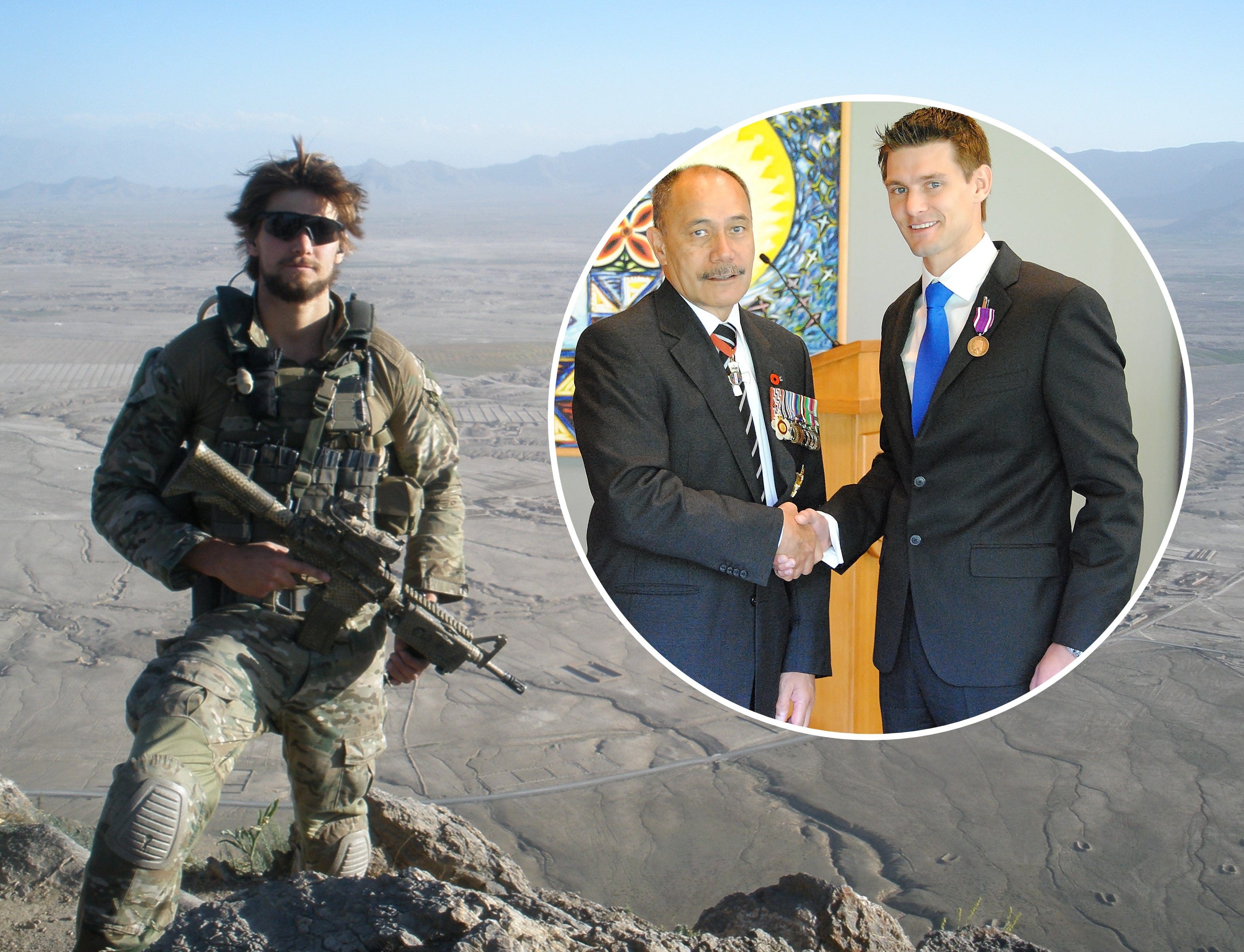
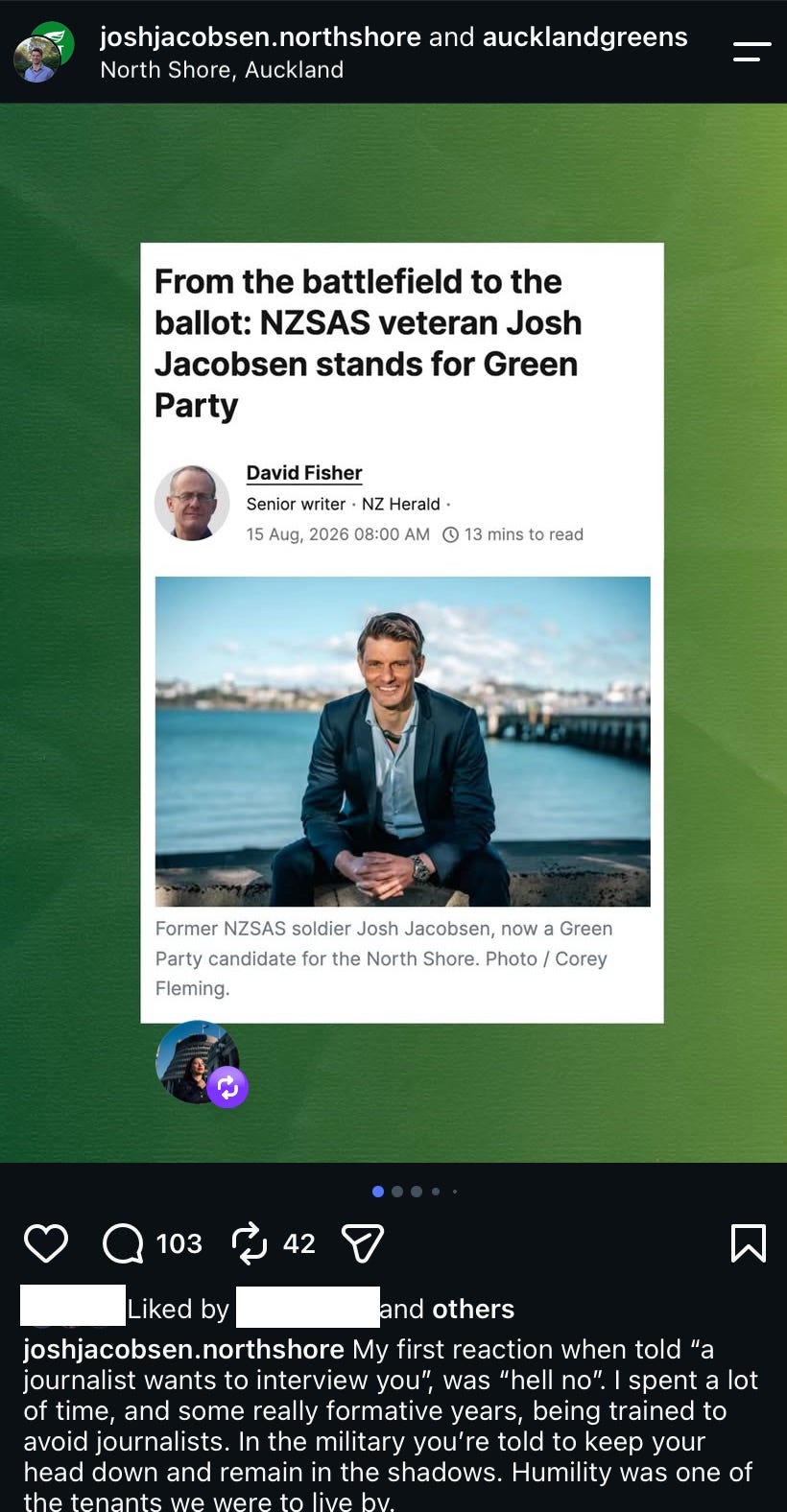
What he omitted was that these “experiences” included time in the NZ Navy and Defence Force, most notably two deployments to Afghanistan in 2010 and 2011 as a Lance Corporal in the NZSAS. After being placed 25th on the party’s candidate list in March, many Green supporters only heard about Jacobsen’s service through interviews published in August fawning over the unlikely ‘digger turned Greenie’, or from Jacobsen’s own social media activity.
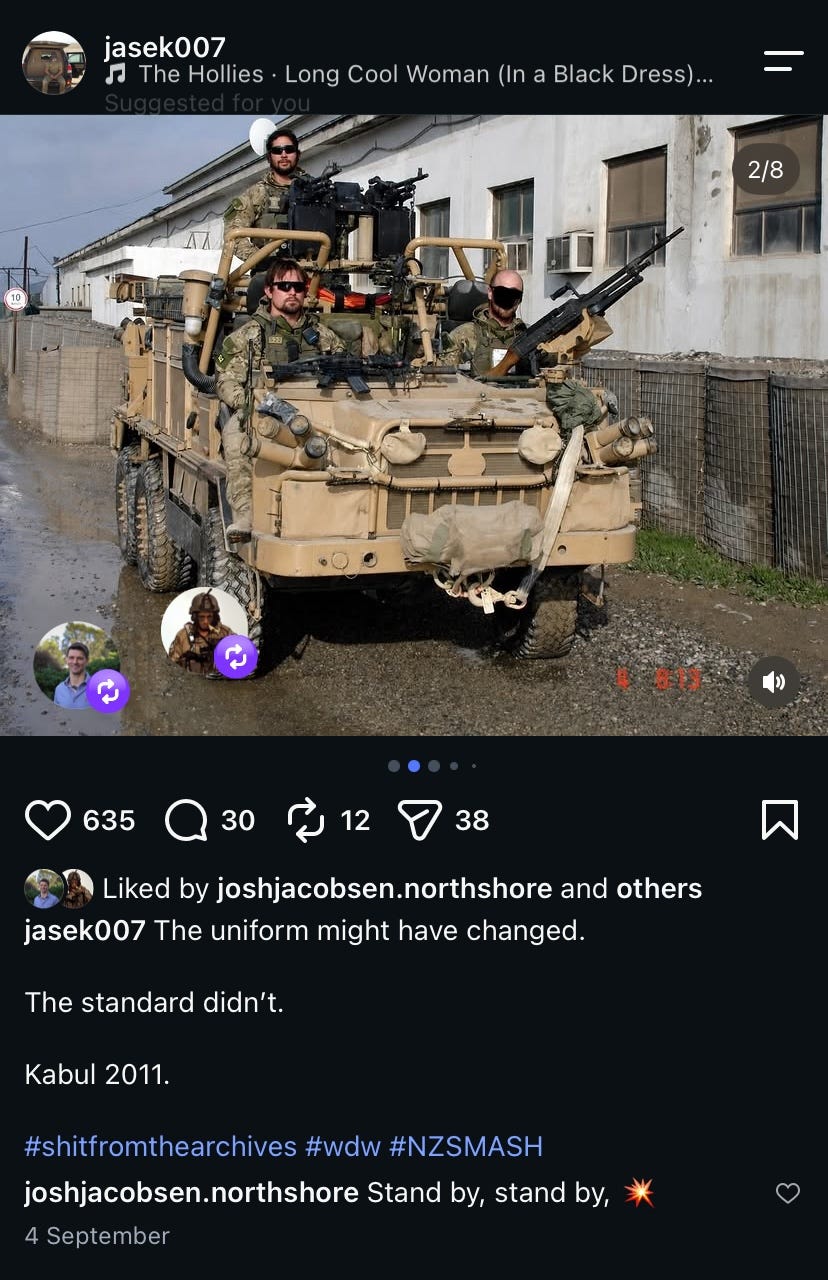
Even more worrying was Jacobsen’s inability to confirm or deny his involvement in New Zealand’s most notorious war crime of the 21st century, Operation Burnham. Concerned supporters began reaching out to the Greens, but the party have instead deflected questions and twisted history to justify Jacobsen’s selection and his involvement in a war the Greens originally opposed from the very start.
Originally born in Whakatāne, Jacobsen relocated with his parents to Papua New Guinea at 7 before moving to Dunedin at 13. He struggled with high school, and by 16 decided to enlist. Josh told Q+A’s Jack Tame that from when “[I was] really, really young, I specifically wanted to be in the NZSAS”, but first joined the NZ Navy instead, becoming a diver at 18. He attempted (and failed) the gruelling NZSAS selection course at 20, but passed the following year in 2008.
The NZ Special Air Service (NZSAS) is the NZDF’s primary special forces (SF) unit. Modelled after the British SAS, they function as the “tip” of the NZDF’s “spear”, using highly-trained soldiers for “high-value” covert operations, often assisted by different military branches, intelligence agencies, and their foreign equivalents.
The NZSAS were first deployed to Afghanistan in 2001 by Clark’s Labour government, leaving in 2005 after multiple rotations. Key’s National government then redeployed them in 2009 to assist in Obama’s “escalate-then-exit” Afghanistan strategy, which planned to use ‘targeted counter-insurgency operations’ to weaken anti-occupation resistance and prepare the US-backed Northern Alliance for an occupation withdrawal.
The 2009 bill authorising the NZSAS redeployment was opposed only by the Greens, as they had done so since 2001, with long-time activist and Green MP Keith Locke being perhaps the strongest critic of New Zealand’s involvement. In a 2010 debate on extending the SAS’s deployment, Locke said:
“… A week ago the [New Zealand] Minister of Foreign Affairs, Murray McCully, attended an international conference in Afghanistan in which President Karzai vowed that his Afghan forces “will be responsible for all military and law enforcement operations in our country by 2014.” This does not square with what the leaked documents say about the [Northern Alliance] Karzai Government and its security forces. According to the New York Times, the documents “recount episodes of police brutality, corruption—petty and large—extortion and kidnapping. Afghan police officers defect to the Taliban with trucks and weapons”, etc. … The US forces have facilitated the corruption of the regime locally and nationally, as ordinary Afghans see it.”
“New Zealand is, inevitably, complicit in all this… We have an SAS unit in Kabul [among other NZDF commitments]… This creates a huge moral problem for us, not least because of the clear violations of international humanitarian law by both the US and Afghan Government forces.”1
Jacobsen that same year was serving his first rotation in the Kabul unit mentioned by Locke, which was running counter-insurgency operations alongside the Northern Alliance police’s special forces-style Crisis Response Unit (CRU). While the government insisted their mission in Afghanistan was one of nation building, according to Nicky Hager and Jon Stephenson’s 2017 book Hit and Run, the NZSAS would instead carry out a barbaric revenge raid just weeks after Locke’s speech.
Operation Burnham
On 3 August 2010, Provincial Reconstruction Team soldier Tim O’Donnell was killed in a roadside IED attack, the NZDF’s first combat death in Afghanistan. According to Hager and Stephenson, who spoke to both the Afghan survivors and New Zealand government, military, and intelligence sources for Hit and Run, this incensed the deployed soldiers. They, and especially the SAS, began seeking revenge.
According to Hit and Run, the raid dubbed “Operation Burnham” was quickly planned by the NZSAS, NZDF, and NZSIS, and ostensibly meant to target “insurgents” suspected to have been behind O’Donnell’s death. They’d chosen 3 suspects from the villages of Naik and Khak Khuday Dad, both in the remote and impoverished Tirgiran Valley. The Chief of the NZDF Jerry Mateparae and Defence Minister Wayne Mapp visited the NZSAS’s Camp Warehouse during last preparations and called PM Key for the final sign off, with Mataparae later watching the raid via livestream alongside SAS leadership.
According to Hit and Run, on the night of 21 August 2010, 60 to 70 NZSAS and Afghan CRU troops left Camp Warehouse in US-provided helicopters headed for the Tirgiran Valley. After one Blackhawk landed near Khak Khuday Dad village, SAS and CRU soldiers exchanged fire with alleged insurgents. Soon after this, American Apache gunships supporting the operation begin bombarding the village. SAS soldiers didn’t call off the Apache strikes and soon left by chopper for Naik. Four civilians were killed and 15 were wounded in Khak Khuday Dad.
In Naik, SAS and CRU troops found the suspected insurgents’ homes empty, in line with Taliban tactics of fleeing into the mountains after an attack. While something the SAS would have known, they instead torch the homes as well as the home of one suspect’s father, despite his opposition to his son’s activities. After searching Naik and finding only civilians, the NZSAS confiscate weapons from one home then order the village strafed by gunships, and two men fleeing are killed by Apache fire. NZSAS soldiers made no attempts to provide medical assistance, and departed for Camp Warehouse soon after. Ten days after the raid, SAS soldiers returned to Naik to demolish several homes villagers had rebuilt after the bombing.
According to Hit and Run, Operation Burnham was a revenge raid that killed 6 civilians and wounded 15, inflicting collective retribution on villagers the NZSAS knew had nothing to do with O’Donnell’s death. The SAS were instead given the freedom to “send a message” to the resistance and get an eye for one of their own, as is common in counter-insurgency. It was also personally approved by the Prime Minister, carried out alongside the SAS-trained Afghan CRU, and executed with ample American assistance.
Some SAS, NZDF, and CRU personnel privy to the operation were unsettled to ashamed of the raid, but out of the three militaries that participated in the raid, only the NZDF denied that any civilians were killed, and instead went to great lengths to cover this up. When not flat out lying, particularly about the number of casualties, the NZDF gave almost zero information about the operation for years and worked covertly to smear Stephenson’s reporting on testimony from the raid’s survivors.
“From knocking down doors to knocking on doors”
After his last SAS rotation in 2011, Jacobsen then worked for UNRWA as a security contractor. First in Jordan in January 2014, then Gaza on a year-long contract beginning September 2014, he said this role changed how he saw the world, particularly working in Gaza. By this time, he’d picked up Pashto, Arabic, French, and Spanish.
He moved to Auckland in 2016 with his partner Lauren Peate, who’d also been working in Gaza at an Apple and Google sponsored startup accelerator for Palestinian entrepeneurs. After co-founding defence consultancy firm Desert Road Group, then leaving it within 18 months, Jacobsen (mostly) moved into software development after 2017, moving through a number of companies before ending up at Peate’s AI firm, Multitudes.
After the Christchurch massacre in 2019, Jacobsen involved in a petition seeking a ban on semi-automatic weapons. His first real participation in the organised Auckland left in July 2021 when he joined the Pūtiki protests against a marina on Waiheke Island, just days before the 100+ day occupation ended in a massive police raid. In recent years, he became involved in the North Shore Green Party branch, before applying for candidacy in late 2025.
And given Jacobsen is now running for a party like the Greens, it would be important to explain his time in the NZSAS. However, his service only came to light through interviews with Q+A and the New Zealand Herald in August. Both focused on Jacobsen’s unlikely transition from special forces soldier to Greens candidate. Q+A’s Jack Tame opened with “from knocking down doors to knocking on doors, how does politics compare?” Later questions focused on Afghanistan:
[Tame:] You’d grown up thinking about what life might be like [in the SAS]… was it fulfilling in the way you expected it would be?
[Jacobsen:] Fulfilling is the word that I would also use. Yes, it was hard. It was arduous. It was difficult work, but it was fulfilling work. We were there doing work that mattered. It mattered to the lives of the people that we helped. It mattered to the lives of the Afghan people that we served alongside.
The Herald’s resident military reporter, David Fisher, commented on his NZ Gallantry Medal for actions during the 2011 firefight that killed Leon Smith, and Jacobsen’s potential to be the first MP to have seen active combat since Robert Muldoon. He also probed about his connections to Burnham.
Jacobsen’s hesitancy to discuss his [NZSAS service] means he will not acknowledge being part of the [Operation Burnham] raid. While Jacobsen won’t be drawn on details, he says there will be no future surprises for the Greens: “I was upfront with everybody through the process.”
However, one attendee to the Greens candidate conference told Exit From Affco that his service was never mentioned in his speech or the candidate conference booklet.
Following the interviews in mid-late August, Green supporters began approaching the party with concerns about the ambiguity around Jacobsen and Afghanistan. This escalated to an open letter published in early September by The Worker demanding that Jacobsen be removed from the candidate list immediately, soon signed by hundreds. It argued that Jacobsen:
“does not demonstrate any real reflection of the immense harm he participated in... [and] that his selection and subsequent media push has normalised foreign invasion and greenwashed the military in Aotearoa, with glowing endorsement and dozens of social media reposts from the Greens.”
The party has instead used repeated talking points to defend the selection and downplay these concerns. In the response from co-leaders Marama Davidson and Chlöe Swarbrick, they address his SAS service by pointing to the party’s historic opposition of their deployments to Afghanistan, before quoting Keith Locke to excuse a contentious claim made by Jacobsen on Q+A:
[Jacobsen:] “The Green Party never opposed New Zealand’s contribution to Afghanistan, what the Green Party was wanting the conversation to be around was: what should our contribution to Afghanistan be?”
The statement is technically correct. We opposed the deployment of SAS troops, but as Keith’s words on the record show, we supported expansion of development aid.
When addressing allegations about Jacobsen’s potential involvement in Operation Burnham, they refer to Hit and Run, quote a section of Hager’s speech at the launch talking about systemic cultural issues in the NZDF, and then say:
The subsequent official inquiry found that SAS soldiers on the ground acted professionally and in-line with international law.
It’s a bit rich to invoke Hit and Run before falling back on the Operation Burnham Inquiry as defence. Following the book’s publication in 2017, Ardern’s Labour government launched an inquiry into the allegations in late 2018. This is what Hager had to say to the inquiry in May 2019:
Journalist Nicky Hager has launched a scathing attack on the Defence Force during a presentation to the Operation Burnham Inquiry, accusing it of not telling the full truth about its operations in Afghanistan and Iraq.
… During his presentation Mr Hager spoke about the military and political context of events covered by the Inquiry, but said there was a gulf between what the New Zealand Defence Force does and what it chooses to tell the public and Parliament.
“NZDF seems to believe it is entitled to hide news that might not be welcomed by New Zealanders and to bend the facts whenever necessary to avoid criticism or scrutiny ... NZDF almost never admits mistakes until utterly forced to, and even then they will minimise and spin the news. Reputation trumps being up front.”
A month later in June, the Afghan survivors withdrew from the inquiry, distrustful of the closed-door hearing policy and disillusioned with the process.
In 2020, the inquiry’s final report was released, and found that Hit and Run’s allegations were unfounded, that there was no cover-up, and despite admitting civilians were killed during the raid, concluded that the SAS “acted professionally” and consistent with “international humanitarian law”.
In 2024, the Ombudsman found that the NZDF did not provide all records in response to OIA requests about the operation, with some of these made with the intention of being presented as evidence to the inquiry. As such, the already flawed inquiry was making decisions based off of an incomplete record. The Greens are instead hiding behind the coverup over the book they cite by using the inquiry’s findings as their defence. Jacobsen told Fisher that:
“[The inquiry] acknowledged that the actions of the people on the ground was in keeping with what New Zealanders would expect of the Defence Force.” That, he says, is good for New Zealand to see.
The co-leaders’ response also highlighted the party’s “holistic, human-centred” candidate selection process which ensures that candidates “align with and work towards the Party’s values and charter, including the principle of non-violence”. It also pointed to his time at UNRWA in Jordan and Gaza and his current software engineer career.
Jacobsen published his own response in September “on why he was standing for the Greens”.
Some are surprised to see a former soldier sign up as a Green candidate, and some are critical of the Greens for accepting me.
Throughout my life, my experiences have shaped my views on creating a more just, equitable, and peaceful world. The Green Party has shown the courage needed to achieve those goals.
As with any overseas deployment, there are legitimate questions about what form our involvement in Afghanistan should have taken and whether that should have included troops on the ground. The Greens opposed military involvement at the time, and there has been criticism of the decisions taken by those in power about our country’s role in the conflict. On the ground, our focus was on protecting human life.
However, like the statements about his service, Jacobsen’s social media activity paints a different story. The following are recent posts liked by Jacobsen’s candidate Instagram account.
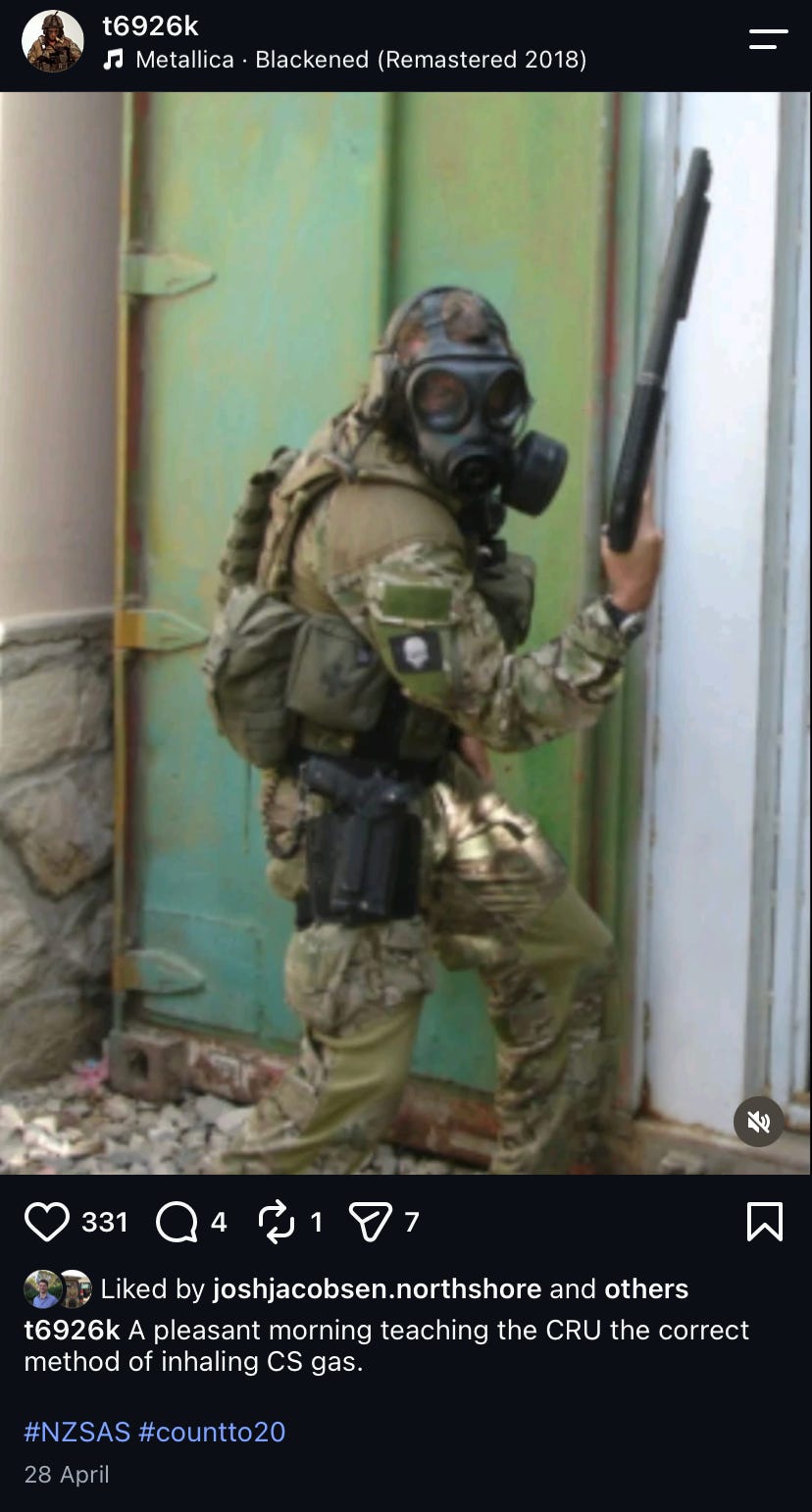
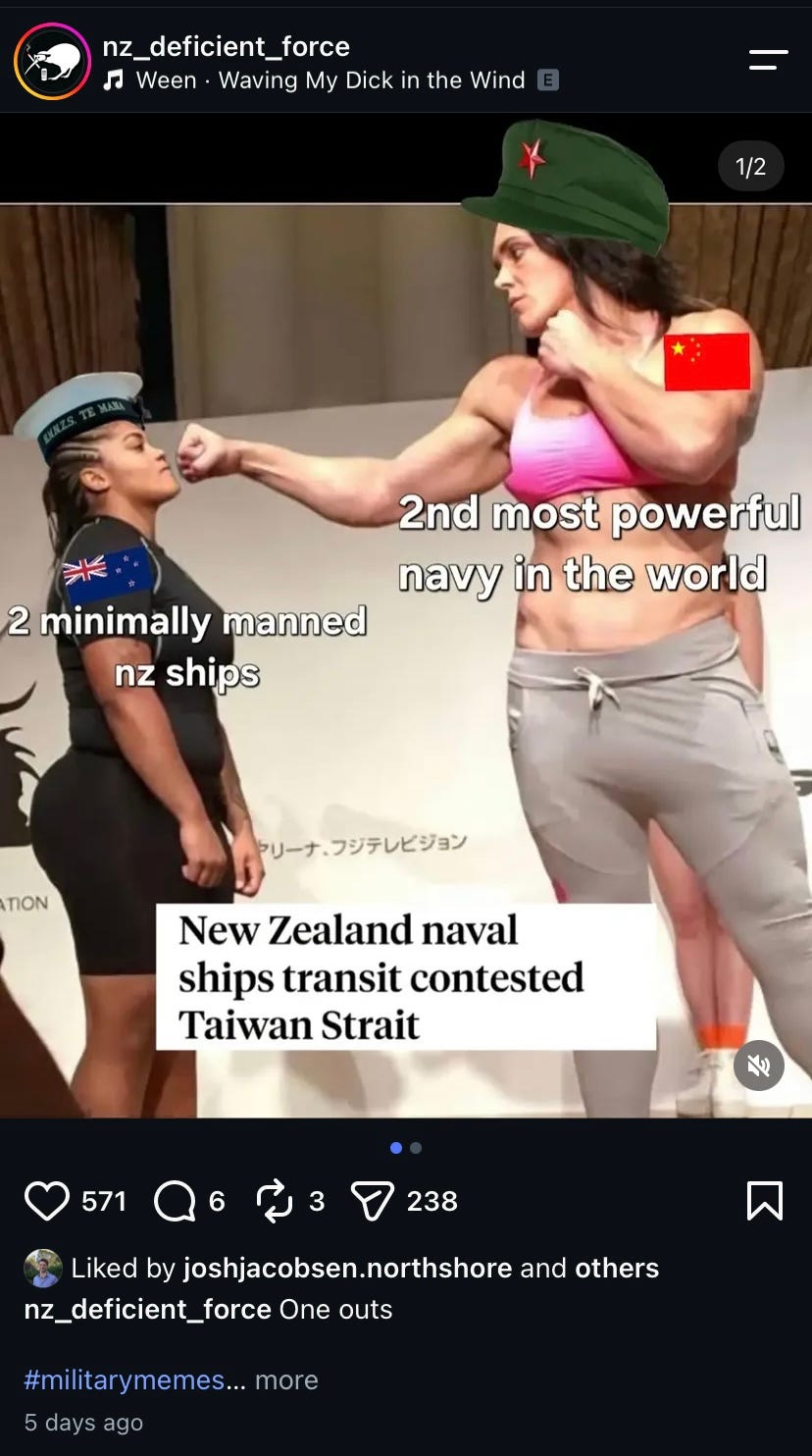
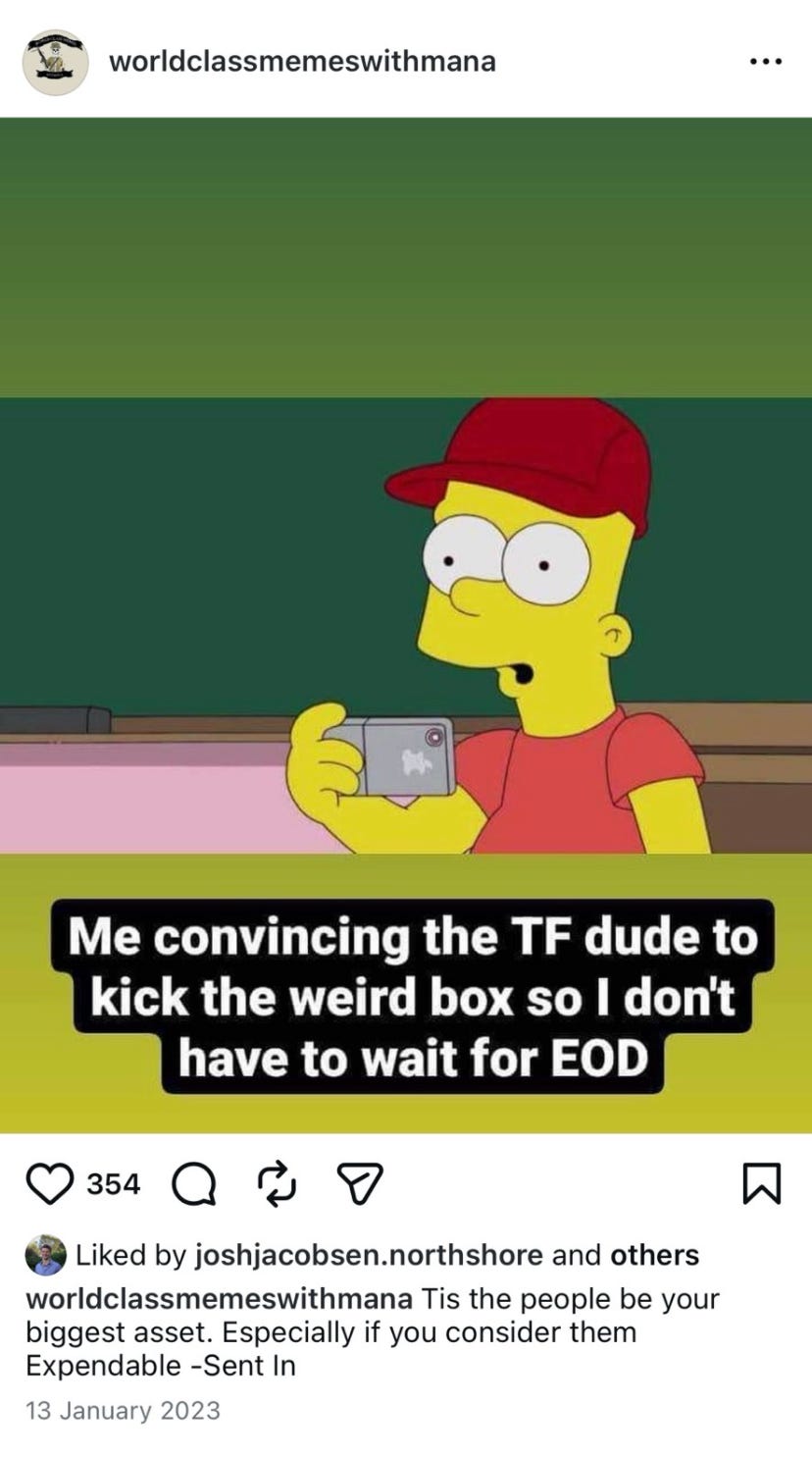
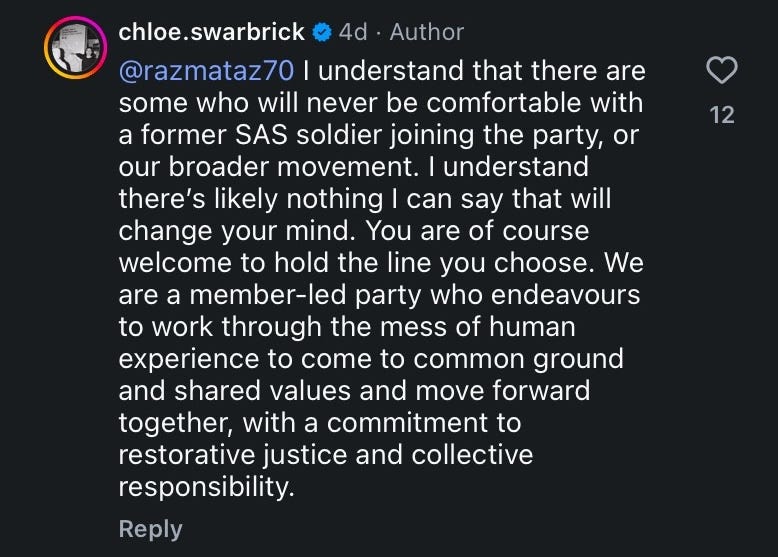
The question of whether or not the Operation Burnham revenge raid was a war crime would have been easy for the Green Party to answer a year ago. It’s a lot trickier now they’re running one of the NZSAS’s own. This inevitably raises the question asked in the headline: why? The Greens knew concerns would be raised, something Chlöe addressed in an answer during an 11 September Q&A session heard by Exit From Affco.
“What we’ve been looking to do is figure out how best to present [Jacobsen’s anti-militarism stance] to people while also looking after Josh and making sure that we’re not misrepresenting anything.”
But why pick a controversial candidate to chase approval from conservatives who’ll almost never vote Green? Why didn’t they prepare a proper explanation for the concerns they should have seen coming? Why compromise the party’s ability to critique New Zealand’s foreign policy in such a fundamental way by recruiting a candidate with so much baggage? And why do this all for someone ranked 25th in an electorate that’s been deep blue since 1949?
The Greens have asked supporters to take them at their word on their candidate selection processes, but what becomes incredibly worrying is that by to co-opting Josh’s veteran status for political ends, the Greens have resorted to rewriting New Zealand’s complicity in the brutal 2-decade long occupation of Afghanistan and perpetuating the Operation Burnham coverup.
Jacobsen and The Greens have also pointed to their stance on the ongoing genocide in Gaza in defence of his selection. When co-leader Davidson was asked on Q+A about the open letter, she told Tame that “Josh said he was on the ground in Gaza, he was looking for a party that would stand on its principles, and call for an end to the genocide, call for sanctions on Israel, and uphold Palestinian statehood.” But Operation Burnham also shares a disturbing similarity to New Zealand’s own imperial history in Palestine during WWI, covered previously on Exit From Affco:
Later in 1918, the Surafend massacre occurred, one of the worst war crimes New Zealand soldiers have ever committed. ANZAC troops murdered up to 137 Palestinians living in a village outside modern-day Tel Aviv, an act of “collective punishment” after a New Zealand soldier in a nearby camp was shot and killed giving chase to a thief who’d stolen his rucksack.
The Greens have been (successfully) chasing wider votership this election, with new campaign management instituting a tighter, “Mamdani-style” affordability politics (while sidelining foreign policy). However, if the Greens are wanting to use the SAS to chase mainstream appeal but cannot be truthful about what exactly went on in Afghanistan, it begs the question of what else they are willing to compromise on, especially with New Zealand’s role in imperialism abroad.
If Jacobsen’s history (and there is a history, more than in this article) comes with so much baggage that the Greens cannot answer these questions, does that make him untenable as a candidate? Because if the Greens want to use the NZDF by laundering its reputation for personal gain, they should be careful of who ends up using who.
You can reach out / submit tips to Exit From Affco @ smithkstead@protonmail.com
Acknowledgements: Thanks to the tipline. William Evans contributed to this article.
Hansard, 28 July 2010, Estimates Debate 12777
Wtf … on the one hand …on the other….😵💫🤦