

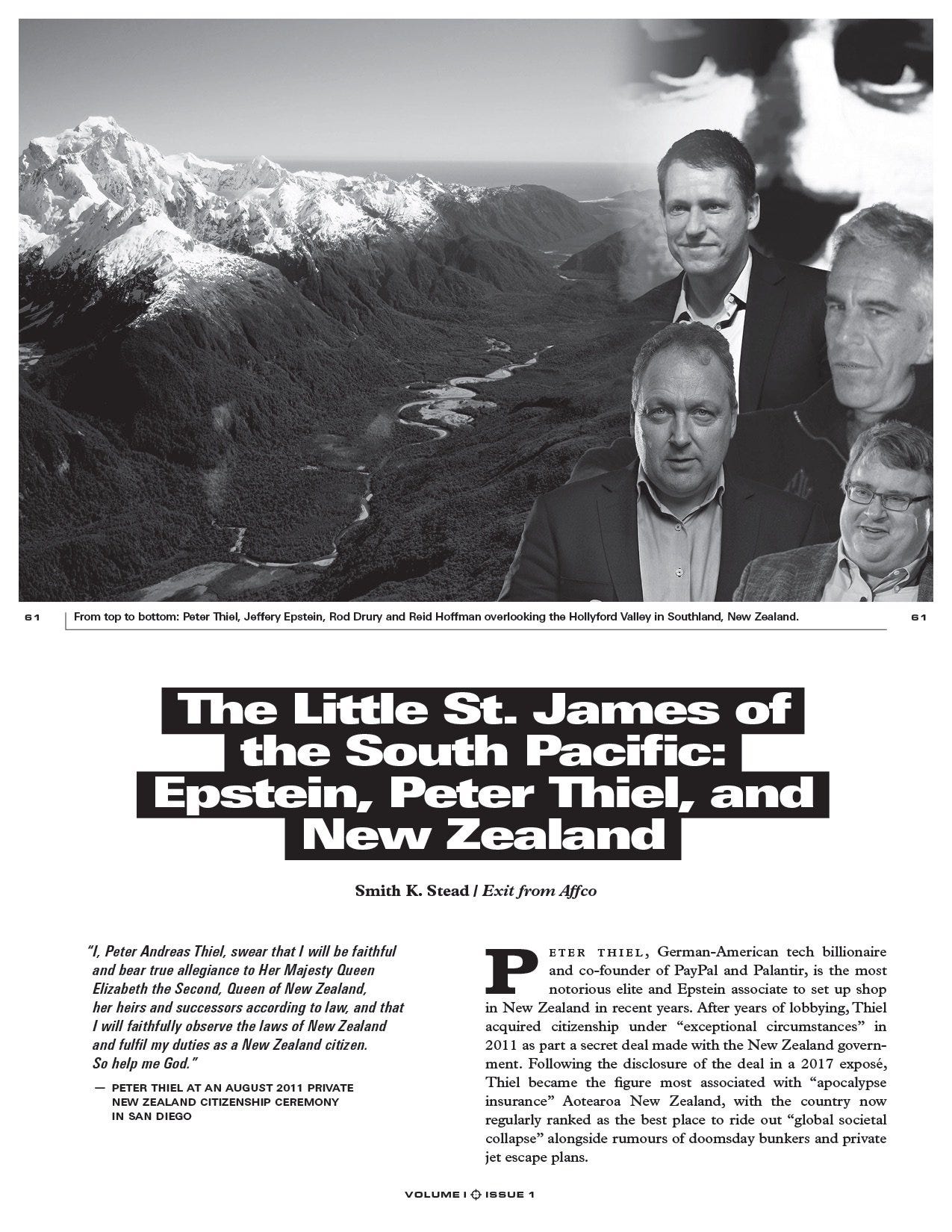
Since this is a “here’s some boring information about Tāmaki Makaurau” piece, I’m also excited to announce my long-read essay “THE LITTLE ST. JAMES OF THE SOUTH PACIFIC - EPSTEIN, PETER THIEL, AND NEW ZEALAND” will be coming out Monday night NZST in the first issue of CommuNoid. It’s been something I’ve been crafting for a while, and I’m really thankful that it gets to be presented in such an incredible format thanks to ParaPower Mapping, Theta, and a few others. I’ll be doing an interview with PPM on the piece, and will share the issue here once it’s released.
On Saturday 11 July at 6pm, shortly after Indian PM Modi concluded his whistle-stop diplomatic tour of the city, his “India One” plane left Auckland International Airport. Once he was airborne, Auckland District Police were left with a whole lot of extra manpower called in from the regions that they didn’t know what to do with.
At 12:30am that night, police were called after a fight had gotten out of hand at nightclub Studio The Venue on Karangahape Road. Karangahape (or K Road) is Auckland’s uptown “alternative” street, running perpendicular to the Queen St main drag. Police entered and arrested one patron before leaving. From the New Zealand Herald:
A short time later, police were called again after reports of more fighting and the bar management advised police that they would be closing the bar. It was estimated that around 500 people were in the bar at the time.
“There was already a significant number of pedestrians in the area around the bar, and additional officers were brought in to manage the crowd as patrons left the bar when it closed,” a police spokesperson said.
Seven people were arrested, however, six of those were subsequently released without charge. The remaining person was charged with assaulting police.
If you’d just read the above, it sounds like police helped out with some crowd control and stepped in when things got too rowdy. As someone who happened to be in Auckland that night and spoke to other witnesses, things looked a lot different on the ground.
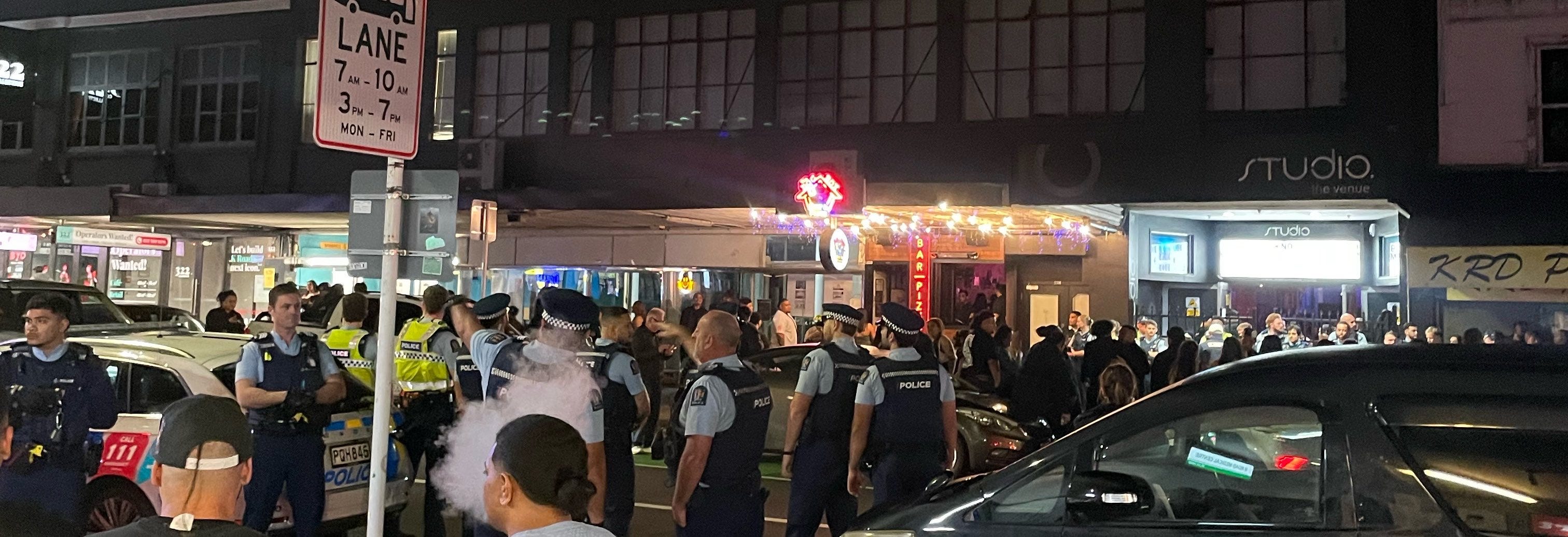
It looked a lot more like the cops deploying 100+ officers with 50+ vehicles (as well as the police Eagle helicopter overhead) to let a bunch of baby-faced recruits practice cracking skulls for a few hours. More importantly, they also seemed to be testing crowd control tactics on Karangahape, soon to become one of Auckland’s most important thoroughfares now the City Rail Link is open.
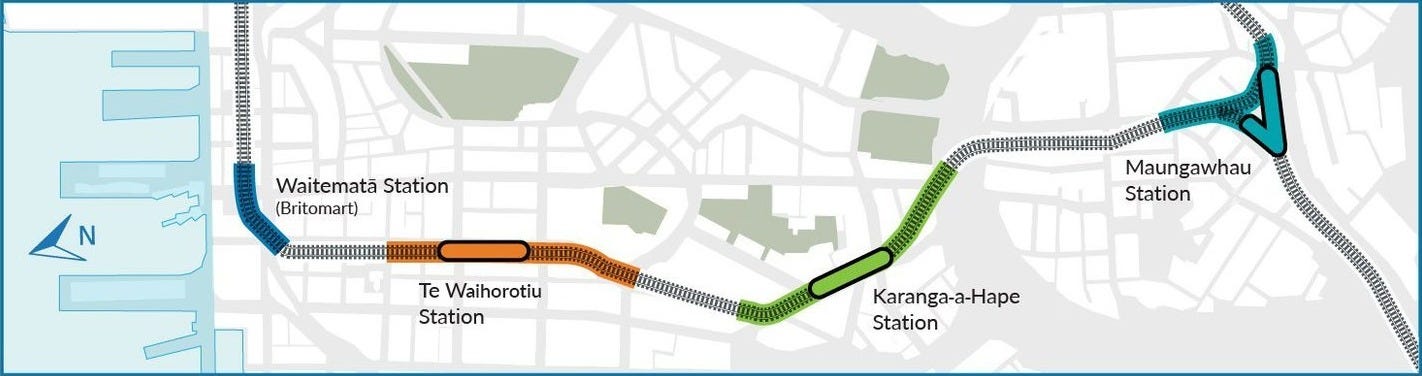
First confirmed in 2013, under construction since 2018, and beset by delay after delay, the hype train for the CRL gained speed as the project approached completion this year, finally opening last Sunday. The CRL brings two new stations to the Auckland CBD, Te Waihorotiu (midtown) and Kāranga-a-Hape (uptown), and two redeveloped stations, the downtown Waitematā station (formerly Britomart) and Maungawhau (Mount Eden) south of Karangahape, currently on the border of city and suburbia.
It’s been accompanied by KiwiRail spending years doing extended (and disruptive) upgrades across the wider Auckland rail network to replace infrastructure sometimes dating back to the early 20th c., doubling capacity and enabling future expansion. Auckland Transport spent the same period of turbulence overhauling the wider public transport network to work with these stations, and Auckland Council has spent years pushing through a variety of zoning reforms aimed at intensifying around urban corridors & transit hubs, often receiving pushback from some residents and the new coalition government (Chris Bishop’s ongoing humiliation ritual is far outside the scope of this article).
The CRL will no doubt dramatically change Auckland, but given that the CRL is breaking so many firsts, including (what the media is calling) the country’s biggest and most expensive infrastructure project ever at $5.5bn NZD, council and cabinet are motivated to ensure a smooth opening and long-term growth. But making sure the trains run on time is one thing, and ensuring that there’s a proper “return on investment” is another.
The hype around the CRL’s impact on Auckland’s transport network has been accompanied by much speculation about its economic impact. Government, council, business, and media have been particularly focused on this, with hopes it’ll revitalise the inner city’s depressed economy. Large portions of the CBD have been under construction since 2018, with businesses also hit by lockdowns, the flight of office workers, cost of living increases, and the coalition government plunging the country into a prolonged “technical” depression.
While the city’s dire straits are often exaggerated, Auckland is undeniably one of the worst affected. Businesses are either unable to cover their overhead or sell many $26 sandwiches, so both new and old have had to shutter or flee the CBD. Around Karangahape Road, recent closures include spots like Flying Out, Wine Cellar, Army and Outdoors, the Thirsty Dog, and Ink Bar.
Karangahape cafe Verona, originally opened in 1992, suddenly shut its doors over tax debts in April 2026, with staff who attempted to save the cafe unable to renegotiate a lease. Music venue Neck of the Woods announced it was closing after 11 years in operation in June, but was saved thanks to a huge community fundraising effort pulling in over $150,000. At a community hui however, it became clear that the fundraiser would only buy time. One scenario cited was that they’d need to see a 50-100% increase in drink sales to return to profitability.
The cost of living crisis alongside the final bleeding out of the social safety net has also pushed many into precarious circumstances, or out onto the street. Auckland’s homeless population has always been the largest in the country, peaking in September 2025 with at least 940 people in the CBD. Although survey numbers have since fallen, it’s likely they’re not capturing the full picture. Lifewise CEO Pam Elgar told RNZ in July that she was already seeing homeless people shift into neighbouring suburbs in fear of the upcoming move-on orders, saying:
“We believe they’re moving, and you can’t count them, because our experience is the people coming into Merge are increasing, the people coming into Auckland City Mission are increasing.”
At a downtown Auckland press conference in February 2026, National MPs announced a bill to give police the power to “move on” people as young as 14 if they were begging, engaged in disorderly conduct, or rough sleeping, and arrest/charge them if they didn’t comply. Amidst record numbers of people trying to find support with essentials like food and shelter, the coalition government is rejecting skyrocketing numbers of emergency housing applications and planning to sweep them out of sight if they end up on the street.
The bill has been debated in the Justice Select Committee for the past few months and seen major pushback. You have to then wonder what is motivating the coalition to push through a bill that almost every organisation involved has said is a horrible idea, from the ministries, to the NGOs, to even the police union. Police Association president Steve Watt:
“The bill risks placing police in a role of managing the visible effects of homelessness, addiction, mental health issues, poverty, and youth vulnerability, rather than addressing the underlying causes,” he said.
Watt said the bill lacked detail, leaving officers with significant discretion over where to move people to or how far away they should go. That created uncertainty around things like handling homeless people’s belongings and referring people to support services, he said.
If passed largely unaltered, it would give police the power to harass the homeless out of urban centres. When Auckland has the largest population of homeless in the country, and the CBD is home to the vast majority of the services that support them, move-on orders amount to giving police a license for social murder. Although that last line would probably warm the hearts of more than a few coalition voters, move-on orders are just one of many “tough on crime” policies introduced this term.
While it’s been led in Parliament by National and ACT, Auckland business groups & lobbyists have been quite vocal in their desire for more tools in the “CBD safety toolkit”. Viv Beck, chief executive of business association Heart of the City, has been controversial for her habit of talking doom and gloom about the CBD in the media. In October 2025, Heart of the City “reluctantly” released a survey of businesses that was hyper-critical of the city’s conditions, leading the board chair to resign soon after and a series of interim chairs until February.
Beck has also pushed for crackdowns on “antisocial behaviour”, coming out in support of move-on orders when it was revealed in November 2025 the government was considering them. Viv Beck was standing alongside those National MPs when they officially announced the policy at that February press conference, later telling media:
“This is another, if you like, another tool in the kit to be able to ensure that we are really ready to capitalise on now, after ten years of disruption for a whole variety of reasons, that our city can actually grow, we can continue to attract investment, and that we’re aspirational so people are looked after if they’re in need but that it’s a really safe, welcoming place for everyone.”
The Auckland Business Chamber, the 170-year old lobby now chaired by exiled National MP Simon Bridges, also came out in support of the powers, calling it “a sensible and necessary step to strengthen safety in the city centre”.
Increasing friction between Beck and multiple parties led to the board suspending her from Heart of the City in March, before pressure from businesses that supported Beck and an Employment Relations Authority ruling reinstated her in May. A month later, 6 out of 7 board members resigned, issuing a statement saying that:
‘they couldn’t justify continuing in their roles given the amount of money they’d have to spend just to bring the organisation into compliance with its “legal, constitutional contractual obligations”.’
Heart of the City receives $6m a year from council allocated from targeted rates, with Viv Beck earning almost $300,000 yearly in her role as chief executive.
The “recently formed” Karangahape Precinct Collective is led by William Keung, a self-described “independent business coordinator”. Through his business WERKITS Ltd, he also contracted out to Auckland Council to provide the ‘Link Alliance Small Business Support Programme’, which gave up to $3000 micro-loans to businesses affected by construction.
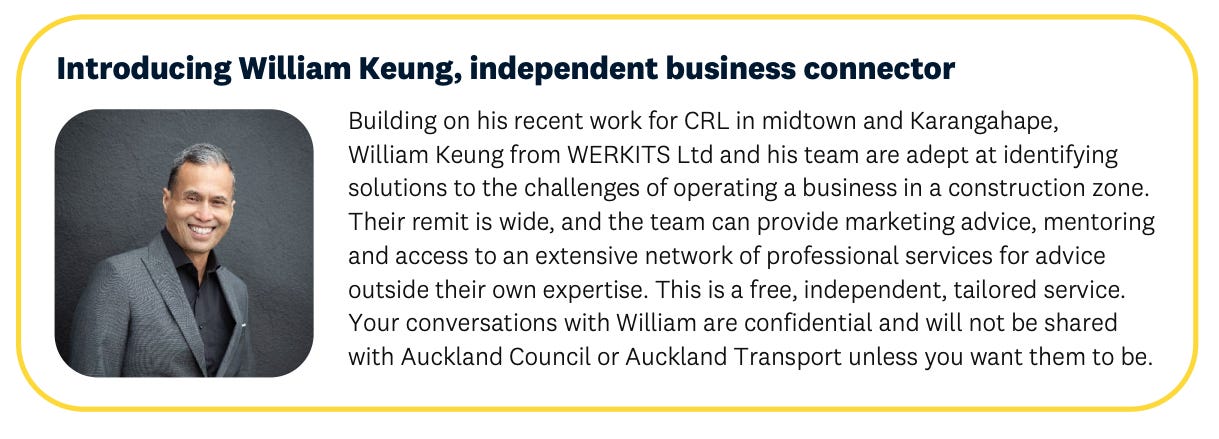
The KPC has no relation to the existing Karangahape Business Association (KBA), originally formed in 1911, and exists nowhere apart from paperwork in May filing it as an incorporated society. Interestingly, Keung met with ACT MP Simon Court two months before in March. Keung (as head of the KPC) made comments to media in July, using the Studio beat up to fearmonger about pandemonium on the strip and argue for increased policing.
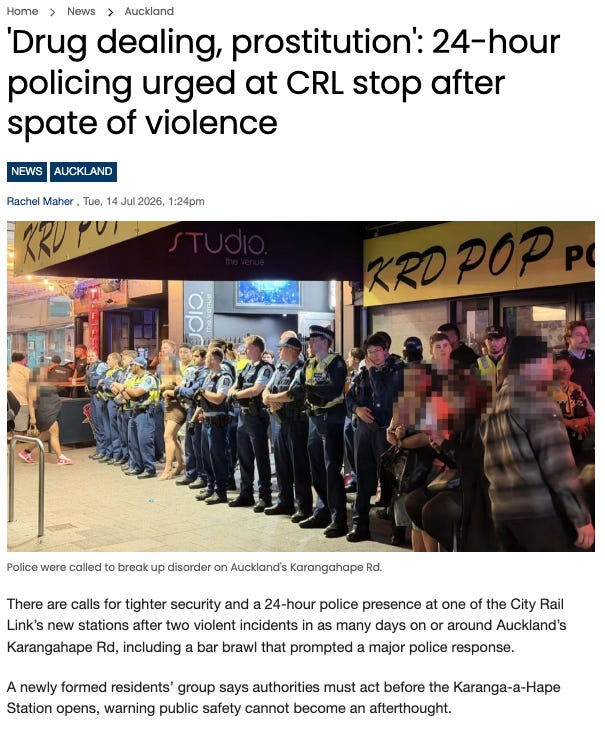
A newly formed residents’ group [the KPC] says authorities must act before the Karanga-a-Hape Station opens, warning public safety cannot become an afterthought.
The group is calling for a permanent 24-hour police presence, saying ongoing antisocial behaviour around the Mercury Lane station entrance risks undermining one of New Zealand’s biggest transport investments.
Since I began writing this story, Keung has wiped his LinkedIn profile, which I’m sure bodes well for the KPC’s future. However, from almost everyone I talk to who goes into Auckland on weekends, police aggression in the CBD has already increased dramatically in recent years. Now that the CRL is open and people are pouring out of Waitemāta, Te Waihorotiu, and Karangahape however, I’m sure it’s going to get a lot worse.
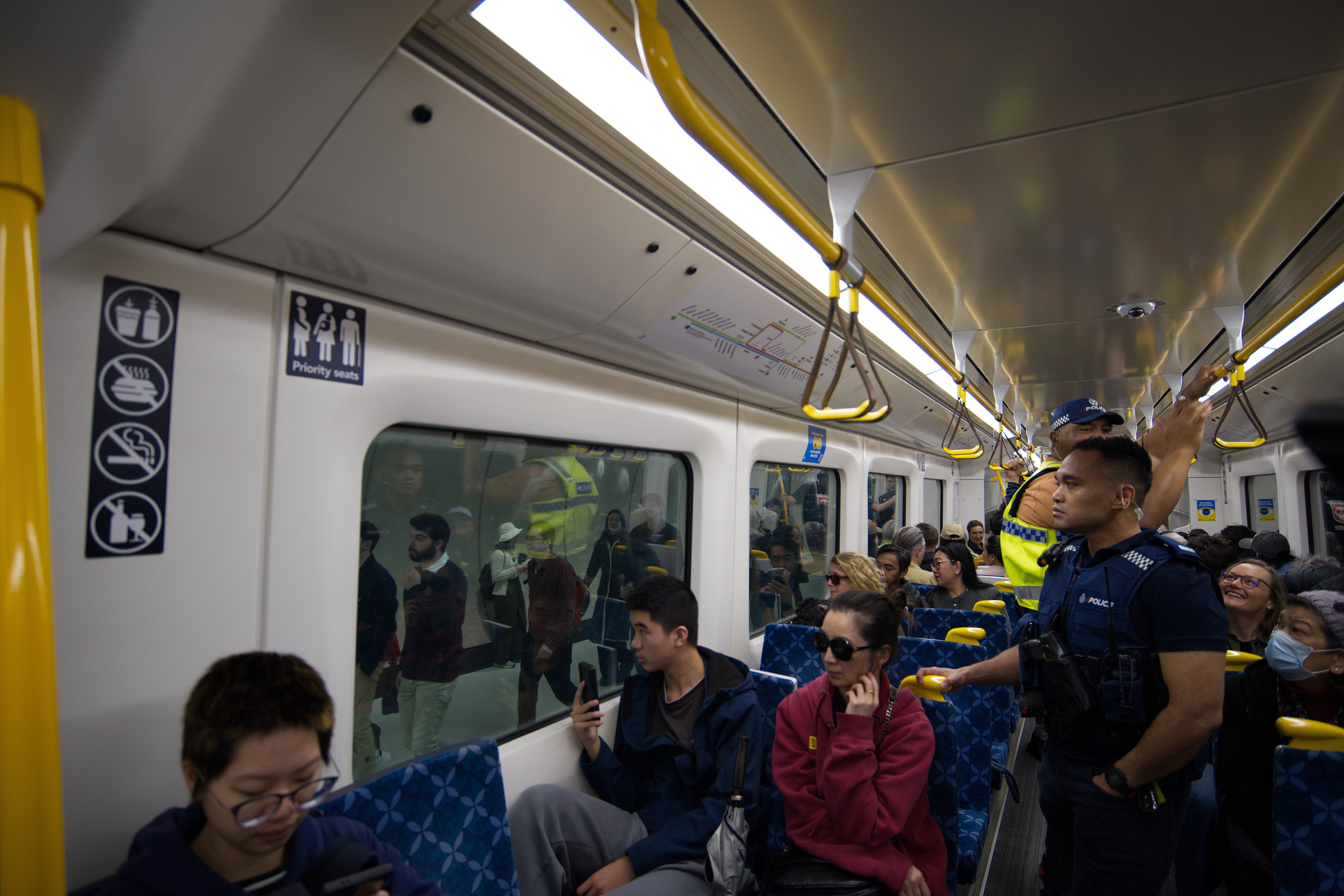
The homeless who now line many of central Auckland’s street corners are a blinking reminder of New Zealand’s societal failures. Instead, the government and private interests are hoping to criminalise poverty to hide the fact that over 110,000 people in New Zealand don’t have a roof over their head every night from the couples coming off cruise ships downtown.
The Prime Minister says giving police power to crackdown on homelessness will mean cruise visitors will get to see Auckland at its best rather than having to dodge rough sleepers and abuse on downtown streets. Chris Luxon told Newstalk ZB’s Mike Hosking he expected plenty of pushback on the beefed up law to move on anyone sleeping rough or begging.
“The bigger issue is like Chuck and Mary coming in for their once-in-a-lifetime trip to New Zealand on a cruise ship, walking around downtown and getting intimidated because someone’s sitting on the doorstop of a shop they’re trying to get into, threatening, shouting at them, abusing them. Right now it doesn’t trigger an offence under other pieces [of legislation], but by putting this in place that helps.”
But once these streets are cleansed, what will be waiting for the people exiting these stations?
The areas around the CRL have all seen substantial land sales, land banking, redevelopments, and value increases in recent years, and now these property holders (remember, everything runs on land here) are wanting to see the “green shoots” they’ve been promised.
Karangahape has already seen dramatic transformation, likely being one of the most well-travelled routes in Aotearoa history. Māori used the ridgeline for centuries as the main route between Te Whau (Avondale) and across the isthmus eastwards. When the settler government arrived in 1840 to build their new capital, they found the same route (right at the top of the city’s Queen St) and built Karangahape and Great North Road out west and beyond.
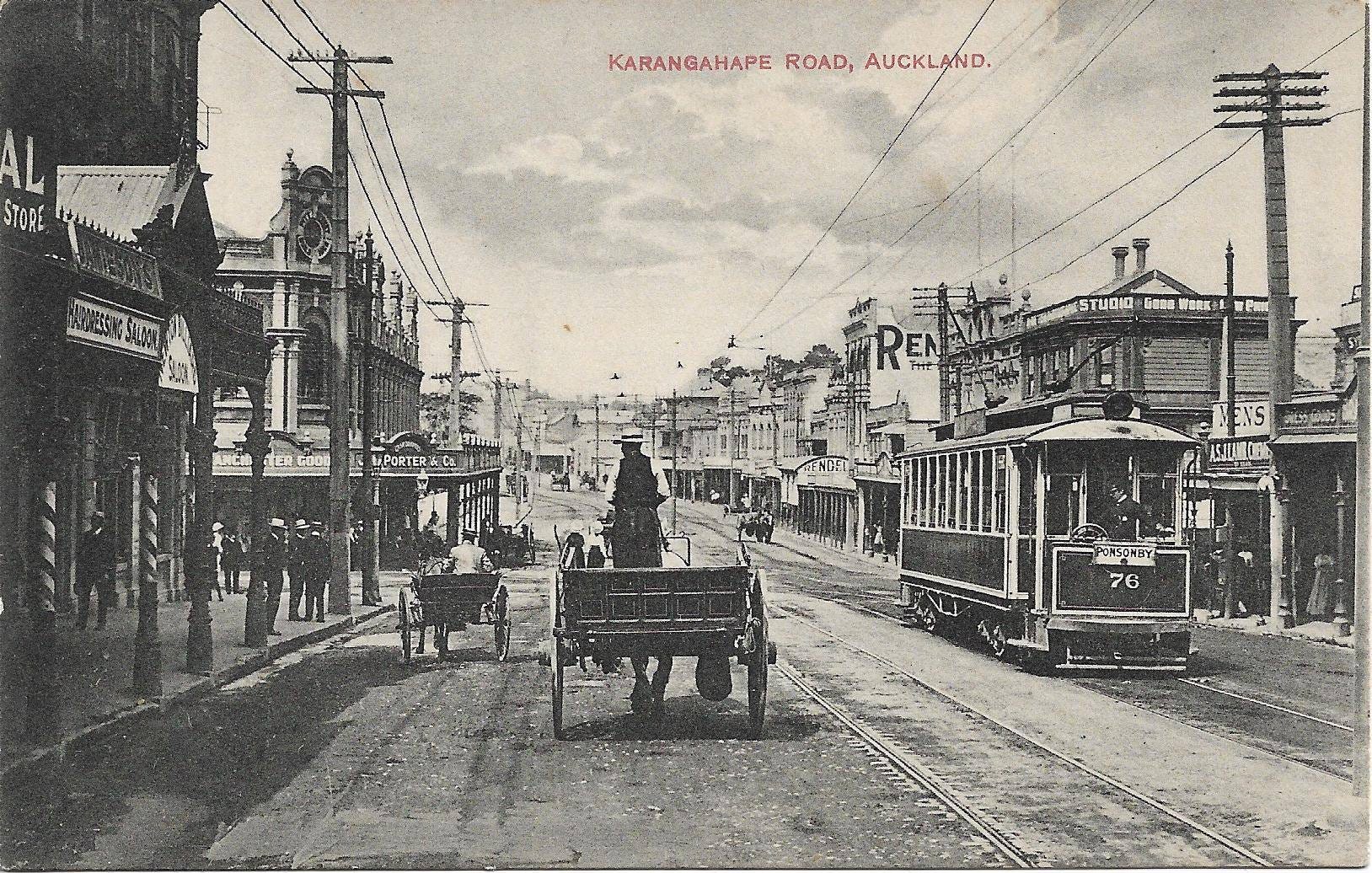
As Auckland grew, and once Grafton Bridge (the world’s largest single-span concrete bridge upon construction) connected the strip to east Auckland, Karangahape became Auckland’s busiest upmarket shopping district from the 1900s onwards. This was up until the 1960s, when the working-class neighbourhoods that used to run through the valleys behind Karangahape were ripped up to build Spaghetti Junction, the massive interchange that’s now the heart of the Auckland motorway system, pushing over 50,000 people out of Eden Terrace, Grafton, and Arch Hill.
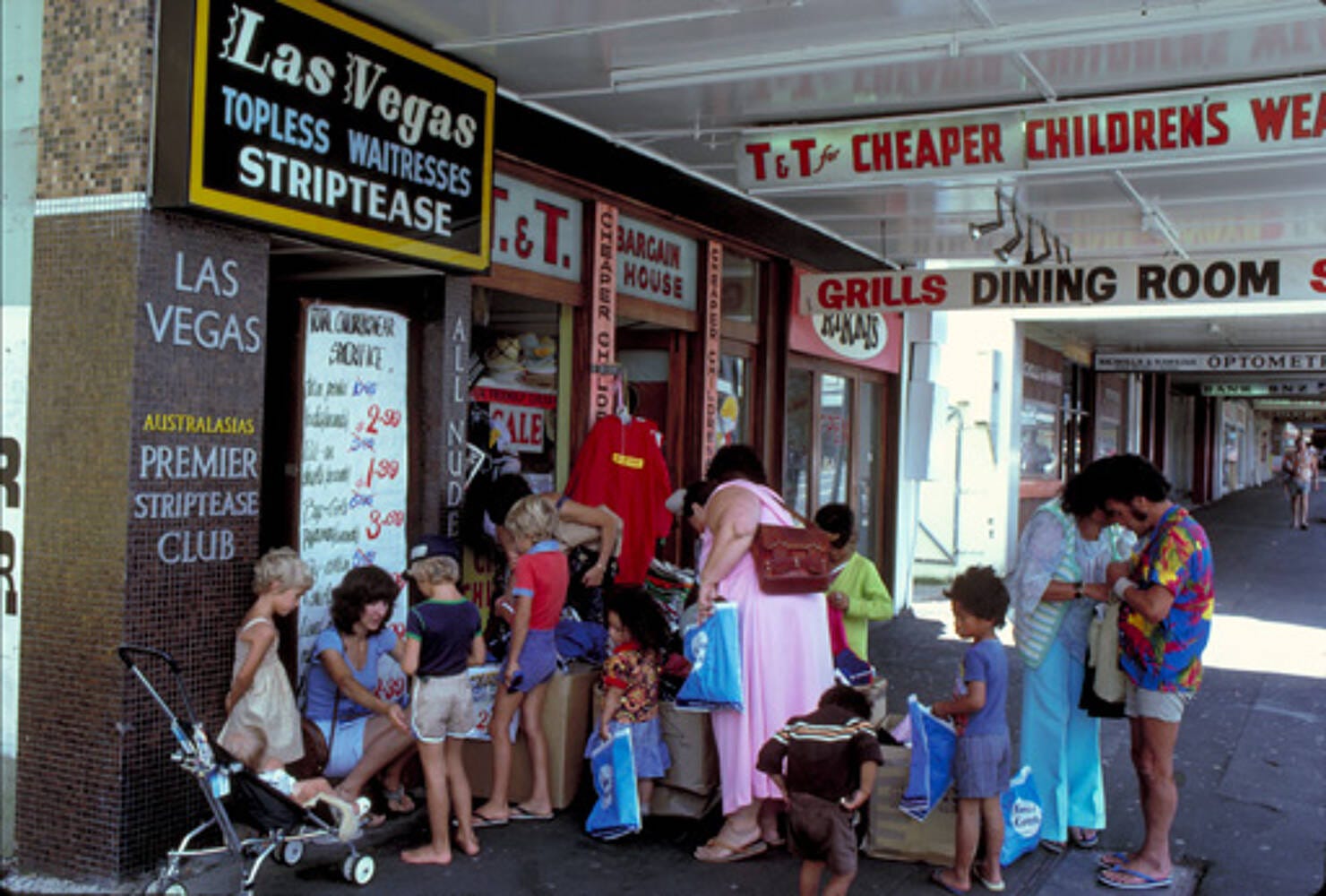
The area fell into a familiar story of post-highway urban decay, with a withered main shopping strip near the Queen St intersection, deteriorating buildings, and the Western portion becoming Auckland’s red-light district (and of course, organised crime). In the 90s-00s, Karangahape became known (only somewhat accurately) as the area where the music venues and art pop-ups could achieve a (sometimes uneasy) co-existence with the existing Karangahape, as compared to the rapidly gentrifying Ponsonby and Grey Lynn suburbs to its west.
Of course the money still moved in, visibly spreading down the street from the Ponsonby Road intersection. Once the CRL was confirmed in 2013, some investors made the “smart” decision that the settler state so graciously rewards and either bought up or jacked rents in the area. Many of K Road’s landlords have gone on record saying they that want the street to be the next Ponsonby. That means businesses that can pay Ponsonby rents, alongside the added price tags of a central city location now accessible by shiny new rapid transit.
There are the established real estate players like Bayleys, Barfoot & Thompson, & Ray White, who provide property management and listing services for owners across the city. Samson Corp, owned by the multibillion-dollar Friedlander family, holds roughly 200 properties throughout the “city fringe” in their portfolio (most notably Ironbank on Karangahape), identifiable through their “forlease.co.nz” branding. Andy Meek, owner of Ink Bar on K Road and the Yot Club in Raglan, accused landlord Tony Bruce in May 2024 of intentionally buying up Ink Bar’s building on K Road to force him out as part of a feud ongoing since 2014.
On Karangahape specifically, the most notorious in recent years has been Paul Reid. Reid got his start as a dishwasher at Verona in the 1990s while playing in bands, before being scouted and landing a role on soap opera Shortland Street. While on the show, he began reinvesting his acting money into real estate.
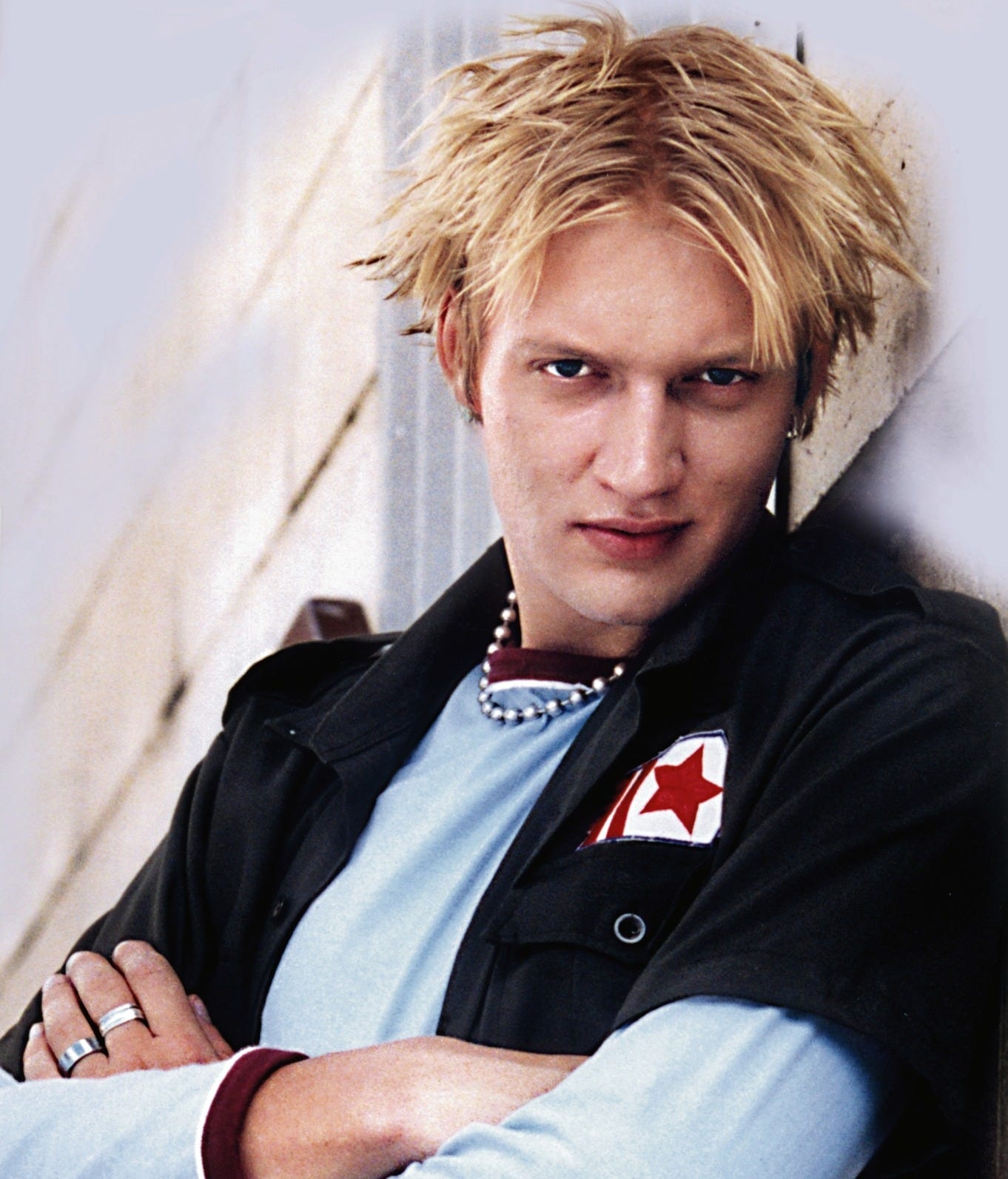
“So while most actors were getting on the P in the weekends in 2002, I was out at Auckland open homes.” - Paul Reid, 2016
By 2009, Reid had managed to build his way into founding property management company the Icon Group. A NZ Herald article named him as Auckland’s most prolific property flipper during the 2013-18 real estate boom years, buying and selling 132 properties and making an average of $55k per sale. Most of these purchases came in 2013 when he flipped 70 central Auckland apartments, the same year the CRL was first confirmed.

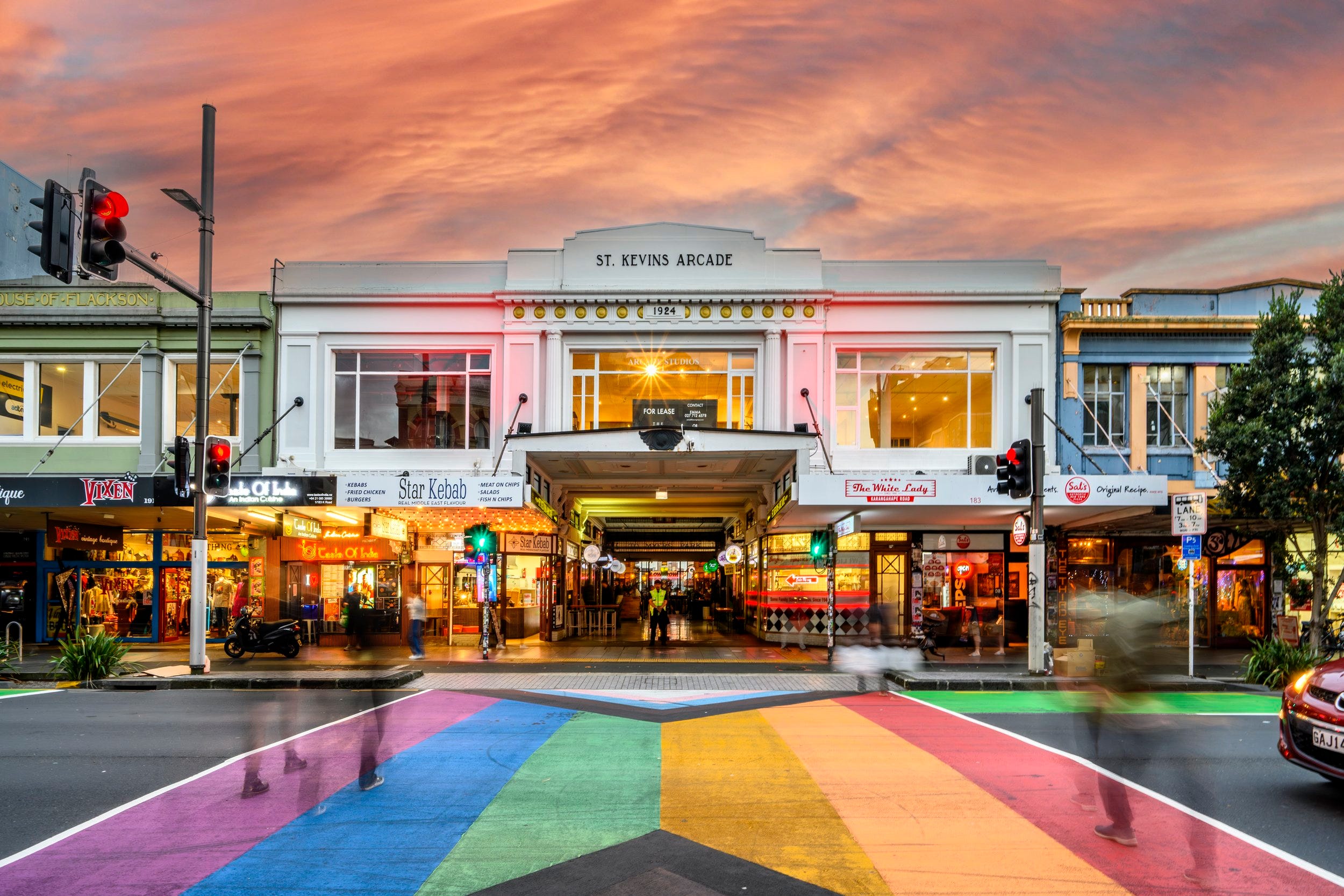
Icon then started buying up commercial property in the CBD, starting in 2014 with the T&G Building, located on the corner of Wellesley/Elliot and opposite the future Te Waihorotiu Station. In mid-2015, Reid acquired the historic St. Kevin’s Arcade on Karangahape. Reid’s purchase raised discussions at the time about the future of Karangahape and its ongoing gentrification (or “Ponsonbification”). Certainly worrying was a story that went around soon after his purchase. From Russell Brown’s 2016 piece K’ Rd at the crossroads:
Things did not start well. On the night Reid and Rose sealed the deal, they had a few drinks. Then they went to the Wine Cellar and had a few more.
The Wine Cellar is the much-loved and definitively grungy K’ Rd bar operated by Rohan Evans behind a door halfway down the arcade’s staircase to Myers Park, and what ensued was a classic culture-clash. Rose and Reid and their friends first baited, then got into a shouting match with, the alternative types clustered around the table in the bar’s smoking area.
They were eventually asked to leave — and Reid exited declaring he was buying the building and would “get rid of you left-wing creeps”.
During COVID, Reid got in hot water for issuing tenants in his Elliot Stables complex notices to pay rent or vacate in late 2020, and for later leaving (what some described as a “coked-out”) Google Maps review for his tenant Whammy Bar complaining they were checking vaccine passes. Reid was charged back in 2008 with assaulting a taxi driver, and in 2012 fined for crashing his black BMW convertible (with custom plates “APTMNT”) into a parked car on the CBD’s Lorne St, fleeing out of central Auckland and over the Harbour Bridge, before being stopped and blowing over double the legal limit.
In 2022, Reid’s Icon Group purchased the Queenstown “Plasma House” mansion for $6.85m from its owner since 2011, German-American tech billionaire Peter Thiel (CommuNoid Issue 1 out next week). In 2024, Reid purchased the rural Albany plot formerly owned by North Shore Esalen offshoot cult Centrepoint, shut down in the 1990s over rampant sexual abuse.
I’m sure elder hipsters could argue for days about when K Road stopped being “cool”, but since the CRL’s confirmation in 2013 and Reid’s acquisition of St Kevin’s 11 years ago, a different clientele has really started moving in. There’s an irony in the Kāranga-a-Hape Station entrances replacing Mercury Plaza, one of the last remaining “vintage” (aka run down) Asian food courts in the CBD, and the Beresford Square underground bathrooms, one of central Auckland’s historic cruising spots.
To be clear, I don’t want this to come across as some desperate plea to try preserve the central city in amber. I was initially wanting to get this piece before the CRL opened, but I decided I wouldn’t knock something before I tried it. Now having done so, I think it’s undeniably an incredible piece of infrastructure. Rail used to be the nervous system that ran this country, and this is a big step in returning to that. I hope that advocates will be able to hold it up in the future as an example of why we should stop taking the short-term route with infrastructure.
But I worry about what else will come alongside it. Coinciding with the CRL’s opening on Sunday, National announced that if re-elected they’d start an Auckland Transport police team to patrol the network. The stations were already crawling with cops on Sunday, and alongside AT’s proud boasting that the CRL adds another 900 CCTV cameras to their existing network of 5000, it seems to be setting the tone going forward. Auckland is now a “big city”, and it’ll get “big city” securitisation as well.
Even if we do or don’t get our own NYPD-style platform doomscroll patrols, expect to see the areas around the CRL and wider train network to change substantially. Self-described YIMBYs often use a rhetorical sleight of hand when they present their solution of guiding the “free market” towards building good urban environs for people by unshackling private developers. But rent-seeking and extractive behaviours will almost always win out, and always to the detriment of the communities they lord over.
If the ecosystem that makes Karangahape “K Road” finally gets pushed out, where does it relocate? How bad would the impact on the New Zealand music industry (and international act touring circuit) be if venues next to stations like Whammy, Neck of the Woods, and the Powerstation shut down? Is it worth demolishing all of that to turn the CBD into one extended theme park for cruise ship tourists?
There’s also a some sort of weird omertà in New Zealand media about acknowledging that the property industry, the country’s largest at 15% of GDP, is a deeply corrupt and mafia-like clique that often works hand-in-hand with actual mafias, something that’s been true pretty much since the founding of the New Zealand Company in 1839. The same is true for construction, with both being some of the largest donors each election. That buys a lot of influence in a small country, and is partially responsible for why both are so expensive here. Motorways here shouldn’t have a higher per-km cost than the mountain motorway Putin’s Russia built for the 2014 Winter Olympics.
It’s easy to talk about “inevitabilities” when cities change in major ways, but these changes rarely are truly inevitable. It was never inevitable that Auckland would have one of the world’s most used public transport networks for decades through trams. Nor that a National Party Minister of Transport and freight company owner would tear up inner Auckland for Spaghetti Junction, helping turn us into what is now one of the world’s highest car owning countries per capita.
It’s undeniable that the CRL will dramatically change how people get around Auckland, and I’m not trying to rain on your parade if you’re excited by it. It just remains to be seen what the wider improvements are, who determines them, and who benefits, as well as what new methods the state employs to ensure its most expensive infrastructure project stays “nice and shiny”. You could make the argument that investors and developers are simply making use of the opportunities and structures available to them, and returning a profit for themselves/their backers by producing improved spaces for businesses and consumers alike. Or you can listen to Paul Reid in his own words:
“[We’re going to] get rid of you left-wing creeps.”
This was a great read and definitely provides food for thought as to the potential machinations that are likely to be happening amongst the city’s powerbrokers.