

Another three years, another slog of a New Zealand general election. And after all that trouble, a hung Parliament that will likely return the conservative bloc with the addition of centrist newcomer the Opportunity Party. It’s been one of the most apathetic elections in recent history, a state of mind that always has bizarre effects on a country’s politics.
The results, the near-record low turnout, and the subsequent reaction point to a deeper sense of dissatisfaction with the current political process. It was hard to find many people who were happy with the results, with National MP Chris Bishop summing up his election night as “soul crushing”.
It’s also been another election bought out by the Mr. Moneybags of New Zealand. Huge donations were made by the country’s wealthiest individuals and industries to the National, ACT, and NZ First (and Opportunity), not to mention the millions poured into “third-party” campaigning. However, it’s not often that rich-listers do the victory lap that the Mowbrays, New Zealand’s richest family, have done over their Split The Vote campaign.
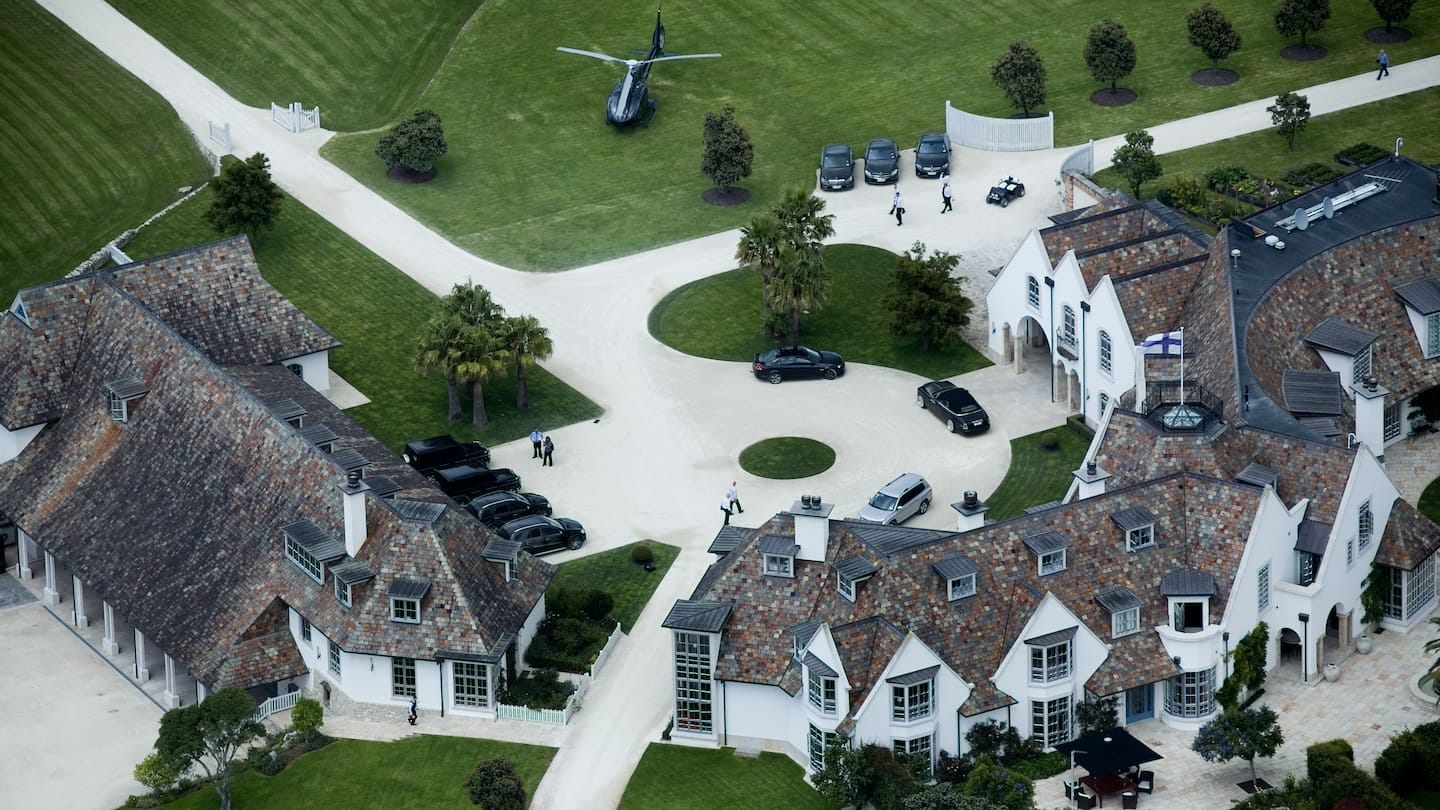
From an election watch party held at his childrens’ Coatesville mansion (formerly Kim Dotcom’s), patriarch Harry Mowbray called into media claiming that his MMP “exploit” had rescued the right bloc from defeat. It was also the first step in his larger plan to reshape New Zealand politics, one being sketched out at that very party.
From In the Zuru mansion with the rich listers behind the new campaign to get rid of MMP by Jonathan Milne (Newsroom):
Spread out on a kitchen bench in Nick Mowbray and Jaimee Lupton’s sprawling home are two ‘Split Your Vote’ t-shirts, and a couple of marker pens. The couple aren’t there, but Zuru patriarch Harry Mowbray and many of his weekend guests have signed.
Right-wing property developer Matthew Horncastle, Canadian-Kiwi private equity investor and NZME director Jim Grenon, TV news host-turned-PR consultant Neil Waka, lawyers Patrick Winkler and Samira Taghavi, ex-Act MP Owen Jennings, former National and Act leader Don Brash… Mowbray offers a pen: “If this comes off, then one day these t-shirts might be worth something.”
Harry Mowbray, property developer and aspiring political shepherd, had first approached the National Party in 2010 alongside Don Brash and Alan Gibbs about a vote-splitting campaign, but was rebuffed each time he pitched it. Harry is also father to the Mowbray siblings, co-founders of mega-toy company Zuru, an empire which alongside other ventures has made the family now worth $20 billion.
Harry and his more politically vocal son, Nick, have become big donors in recent years, and this coalition has been great for “entrepreneurs” like them. The total wealth on the NBR Rich List increased by $27b in the last year alone, and National (and particularly ACT) have been delivering on making the wealthy even wealthier.
But those not sitting on hundreds of millions in property weren’t doing so well, and by mid-2026, National was on track towards a huge slip in party vote, down almost 10 points from 2023’s 38%, and on track to lose some key electorate seats. Harry again tried to pitch National on his vote-split strategy, but he was rebuffed.
So he called a meeting of “high-worth individuals” to campaign, independently of National. “We decided to get money,” he says. “We got a whole lot of high net worth individuals in here, and presented it to them – and then ran into the Electoral Act. We realised we couldn’t say what we needed to say unless we were doing it as individuals.”
So, Split Your Vote was launched in August 2026. Ostensibly fronted by Harry, the website hosted a letter credited to him and addressed to the “middle New Zealand” National voter on how to save the right bloc by exploiting the country’s MMP electoral system.
The strategy was this: instead of voting two ticks National, if enough supporters instead gave their party vote to either ACT or NZ First, it would distort the right’s proportions to rack up as many seats against Opportunity, if not retain a full majority. He urged them to “swallow a rat … for New Zealand Inc”.
Under Mixed Member Proportional (MMP), introduced in 1996, voters get an electorate vote and a party vote. After electorate MPs are seated, the rest of Parliament’s 120 seats are accolated to parties proportional to party vote. If they win more party votes than they win electorates, additional MPs from the party’s ranked list are seated, and if it’s lower, an “overhang” of electorate MPs is created.
“The fact is, if “Two Tick National” Party Voters split their vote by voting for their preferred [sic] elctorate candidate, and Party Voting for Act that will guarantee an election win for the centre-right coalition.
He added that ACT and NZF supporters could return the favor by electorate voting National, but the math meant the minors stood to gain much more from an increase share. In past elections the overhang has not played a factor, at most 3 extra seats in 2023. After heated internal battles and fissures, Te Pāti Māori announced that they’d only run in Māori electorates this years and told supporters to party vote Green or Labour. Harry called foul play in his letter, citing it as his justification to run the same campaign on the right. But his fears about New Zealand’s political future run deeper.
ACT are now eating National’s lunch as the stalwart Friend of Business, receiving just shy of what National got in donations in 2026 (both ~$2.1m). Nick Mowbray, Harry’s son, donated $225,000 to ACT and $250,000 to National in 2026, and leader David Seymour has been very effective for his backers.
However, outside of his relatively small fanbase Seymour is consistently the most loathed major politician in the country in polls. In the National Party that Key built, their standing as the conservative party required its liberal flank, the MPs who could make centrists say things like “but, there are some really principled people in the party…”. That wing has now been decaying for years, but ACT (and NZF) cannot survive under MMP without a National with swing voter appeal.
National now faces an existential crisis, with voters headed right, left, or towards Opportunity, and falling numbers of those being signed onto the property ownership contract of New Zealand conservatism. Mowbray came to this conclusion, or in the way a Pākehā property billionaire born in 1951 might come to it:
Then, ahead of the last election in 2023, Mowbray met National’s new leader. And Christopher Luxon described a revised target demographic: ‘My focus is on the solo mum with two kids in Hamilton West,’ Mowbray recounts.
“And then, I had the whole realisation that the Parliament is actually elected by the swing voter, and we’ve only got one electorate, which is all the party vote. And that swing voter happens to be female because they vote emotionally, and that’s the Remuera lady, the Hamilton solo mum.
“The whole of the party vote system is women driven by emotion, and so that’s what the left always argue about. It’s always emotion. These people haven’t got this and that and the other thing, and you need to throw some money over here…
“That mother with two kids, what she wants is another $10 or $20 in her weekly budget, and so it’s very easy for the left to throw a few dollars into that pot, and drag those people over emotionally. That’s the interface, and so National and Labour have to fight that interface.
“So they can carry on marching off over to the left, and keeping on dragging that swing voter further and further over this way … My analysis of the MMP system is that we’ll always move left.”
From August on, Harry and his allies began directing money, time and attention towards Split Your Vote, which was subsequently boosted, drummed up, and scandalised in the media. He also funneled money into the fringe-right space in order to sidestep donation laws:
Mowbray paid conservative influencers Chantelle Baker and Penny Marie to post, and donated a little to anti-vaxx Reality Check Radio to help them take out newspaper adverts nationwide – all under his $17,000 cap as an independent third-party promoter, he says.
Again, it’s not every election that one of the country’s mega Rich Listers publicly announces a campaign to exploit the political landscape, they usually just pay Jordan Williams. Harry instead wanted you to know that there was a campaign, because his primary goal was to undermine MMP in order to replace it.
Everyone stayed over after the election night party. And as we sit down to talk in the pavilion, the last of the guests are still lazing in the pool; others have headed back to the airport. Grey robotic mowers crawl over the sweeping, manicured lawns – one of the many tech products being developed by the Mowbray family in its Chinese factories. (Mow-bray, geddit?)
Mowbray says he can now work MMP; he’s proven it by helping to engineer a National overhang this weekend. “I would be delighted if we just carried on using MMP, just like it is. I can guarantee you a right-wing government for the foreseeable future.”
But he believes he owes it to New Zealand to instead find a more stable system in which the tail can’t wag the dog. “The whole focus here is to show how bad MMP is.”
National requested that Police investigate Split Your Vote, but Harry said MPs had privately reached out to express their support. It was soon revealed that both ACT and NZ First had signed off on the campaign beforehand. And if the state does pursue prosecution, Harry is setting himself up as the perfect martyr, and test case, against MMP. It’s a fight that he sees as existential.
National may be idiots. But the opposition are worse. “It’s incredible frustration. But at the end of the day, from where I sit, the other side is just not an option. So what do you do? What do you do?”
Labour’s capital gains tax. The Greens’ wealth tax. Opportunity’s land tax. “The Green Party here is not green; it is communist,” he asserts. “And if the Opportunity Party is here, I wouldn’t be interested in putting anything into R&D. Zero.”
New Zealand needs entrepreneurs to create wealth and jobs, he says, but politicians don’t get it. “Chlöe Swarbrick and Qiulae Wong and all those people haven’t got a bloody clue how to do that.”
A lot of moneyed interests got a taste of what a dominant ACT looks like in government and will now accept no substitute. When the last Labour government tried to introduce incremental regulation on key industries like farming, fishing and property, National received $10m in donations.
Who was the worst [PM]? [Mowbray:] “Jacinda. There’s no question in my mind about that.
Whether or not Split Your Vote was the decisive factor that Mowbray has claimed, it’s certainly generated a lot of ill will and apathy towards the whole political process, further soured with a hung Parliament. National have also lost its more experienced (and more ‘liberal’) MPs like Willis, Bishop, and Goldsmith, while ACT and NZF have both seen a jump inside the bloc.
Many factors made this election one of the most apathetic of the MMP era, not helped by it being the same Chrises as last time. The results, Opportunity’s results, and the subsequent discourse that many want some sort of change to the ‘status quo’. But that is also the conversation that Mowbray wants to start.
“The whole focus here is to show how bad MMP is.”
Before MMP under first past the post (FFP), decades of a gap between the popular vote and governments formed worsened in the 1970s and reached a peak in the 80s. In 1978 and 1981, National took power despite winning a large minority of to Labour and Social Credit. Years of grassroots campaigning and pressure led National’s Bolger to commit to a referendum on MMP, and despite a huge campaign launched by the business titans of the day, it passed in 1993.
For all its flaws, MMP has been far more representative than what it replaced. There will be a lot of talk about electoral reform after an outcome like this, but keep in mind who is pushing it, why, and what they’re planning to replace it with. Mowbray is not concerned with the electoral representation of the solo mum living paycheck to paycheck. He wants a return to business as usual for New Zealand Inc, whether you like it or not.
A timely book release, and a weekend reading suggestion:
Property, Power and Poverty: How Housing Derailed the Economy and Democracy in Aotearoa-New Zealand by Aeron Davis
I’ll be using this soon to examine the major parties and Chris Bishop, but it’s a great look into the uniquely tight stranglehold property has over New Zealand politics, and only 140 pages and open access.